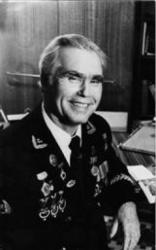
Alexander Lapin
- From rural beginnings to agricultural leadership
- The Pushkin Experimental Station
- Arrest and execution
Alexander Kondratievich Lapin was a Ukrainian Soviet agronomist and scientific administrator who directed the Pushkin Experimental Station of the All-Union Institute of Plant Cultivation. His work was part of the Soviet effort to organize crop research and seed selection, but his career ended during the political purges of 1937.
From rural beginnings to agricultural leadership
Lapin was born in 1894 at the Balakleevsky sugar factory in Kyiv province, then part of the Russian Empire. He came from a peasant family and joined the Communist Party in 1919, during the upheavals that followed the Russian Revolution.
In the 1920s, Lapin held a series of administrative posts in Ukraine, including work connected with agricultural administration and the sugar industry. From 1926 to 1930 he headed the variety and seed department of the Sugar Trust and directed the Kyiv Institute of Selection. These roles placed him in the growing field of organized crop improvement.
The Pushkin Experimental Station
By the 1930s, Lapin was director of the Pushkin Experimental Station, part of the All-Union Institute of Plant Cultivation, a major research institution led by botanist and geneticist Nikolai Vavilov. The station conducted agricultural experiments and supported the study and improvement of cultivated plants.
The station belonged to a national network designed to test crop varieties and improve seed production. As its director, Lapin held a central administrative position in that work.
Arrest and execution
In July 1937, during the political campaign against Vavilov and other scientists, Lapin was arrested on accusations of belonging to a counter-revolutionary organization. A visiting session of the Soviet Supreme Court’s Military Collegium sentenced him to death. He was executed in Leningrad on 30 November 1937.
His conviction was later recognized as unjust, and he was posthumously rehabilitated. Lapin’s fate reflects the danger faced by Soviet agricultural researchers and administrators during the Great Purge, when institutional ties and fabricated political accusations could lead to arrest and execution.