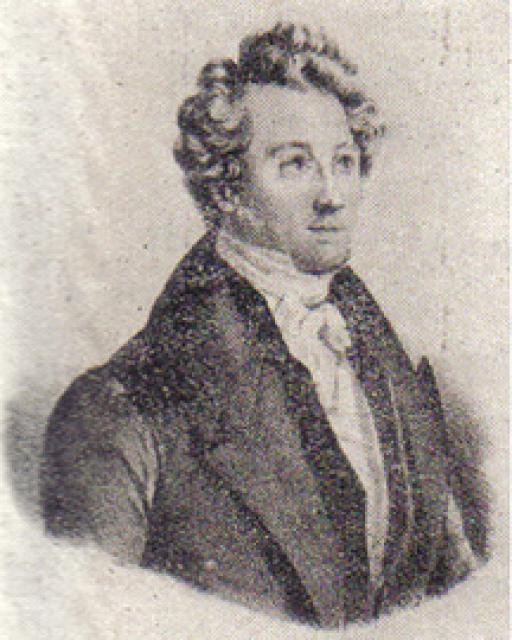
Alexandre Gendebien
 Belgium
- From Mons to the Brussels bar
- The revolution of 1830
- Parliament, justice, and opposition
- A contentious founding figure
Alexandre Joseph Célestin Gendebien (4 May 1789 – 6 December 1869) was a Belgian lawyer and politician whose forceful personality helped shape the country’s founding crisis. A prominent opponent of Dutch rule, he joined the provisional government during the 1830 revolution, took part in organizing the new state, and later served as a member of the National Congress, minister of Justice, and representative in parliament. His career reflected both the urgency of Belgium’s birth and the sharp disagreements over what the new nation should become.
From Mons to the Brussels bar
Born in Mons in the Austrian Netherlands, Gendebien came from a family with deep legal and political connections. His father, Jean-François Gendebien, was a lawyer and public figure whose career crossed the upheavals of the late eighteenth and early nineteenth centuries. Alexandre entered the Brussels bar in 1811 and built a reputation as an advocate and legal scholar.
Under the United Kingdom of the Netherlands, formed in 1815, Gendebien became an outspoken critic of King William I’s government. In the 1820s, he defended printers and publishers prosecuted for their political writing, a line of work that placed him close to the growing opposition movement. He also supported cooperation between Catholics and liberals, an alliance that helped unite groups otherwise divided by religion and ideology.
The revolution of 1830
The July Revolution in France in 1830 encouraged Belgian opposition to Dutch rule. Gendebien initially hoped the southern provinces could unite with France. During the Belgian uprising in August and September, however, events moved quickly: armed conflict in Brussels and the formation of revolutionary institutions made independence an increasingly realistic goal.
Gendebien became a member of the provisional government on 26 September 1830. He was also part of the central committee that assumed executive authority and helped organize the emerging state. The provisional government proclaimed Belgium’s independence on 4 October. In the weeks that followed, Gendebien traveled repeatedly to Paris on diplomatic missions, seeking support and negotiating the international position of the new country.
His French sympathies remained strong, but they did not override his commitment to Belgium’s territorial integrity. In the difficult negotiations over Belgium’s future, he opposed proposals that would have divided the country among neighboring powers. By late September, he had embraced independence as the means of securing a distinct Belgian state.
Parliament, justice, and opposition
Elected to the National Congress for Mons in November 1830, Gendebien became one of its more combative speakers. The assembly had to choose a constitutional framework and a head of state while the country remained diplomatically vulnerable. He favored a close relationship with France and advocated a French candidate for the throne, including the Duke of Nemours. That proposal failed, and Leopold of Saxe-Coburg was eventually selected as king.
Gendebien served as minister of Justice in 1831 and was also associated with the administration of justice during the transition from revolutionary government to regular institutions. He represented Mons in the Chamber of Representatives from 1831 to 1839, where he often led opposition to governments he considered too moderate. His fierce disputes with former allies, including Joseph Lebeau and Charles Rogier, showed how difficult it was to preserve revolutionary unity once independence had been achieved.
A contentious founding figure
Gendebien’s public life was marked by conviction and confrontation. He was a determined advocate for national independence, yet his vision for Belgium was shaped by francophone and republican sympathies that frequently put him at odds with the constitutional monarchy that emerged. His memoirs about the revolution, published in the 1860s, offered his own account of the events and controversies in which he had played a part.
He died in Brussels on 6 December 1869. Gendebien remains associated with the September Days of 1830 and the early institutions of independent Belgium: a lawyer turned revolutionary organizer whose ambitions and arguments helped define the country’s first political choices.


