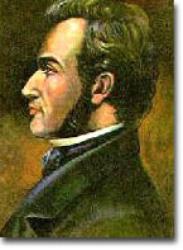
Artaxerxes I
- Artaxerxes I: A Reign of Diplomacy and Power
- Character and Rule
- Foreign Policy
- The Peace of Callias
- Internal Affairs
- Death and Legacy
- Family
- - Sogdianus
Artaxerxes I: A Reign of Diplomacy and Power
Early Life and AccessionArtaxerxes I, a member of the Achaemenid dynasty, ruled the Persian Empire from 465 to 424 BCE. Born as the youngest son of Xerxes I and Amestris, he ascended to the throne after a palace conspiracy in August 465 BCE. The plot, orchestrated by Artabanus, the captain of the palace guard, and Aspamitres, a eunuch, resulted in the murder of Artaxerxes' father and his older brother Darius.
Character and Rule
Artaxerxes I proved to be an able ruler, known for his statesmanship, military prowess, and administrative skills. Despite his youth, he demonstrated a maturity and determination to restore Persia's status as a global power.
Artaxerxes' reign was characterized by wisdom and moderation. He reorganized the empire's administration, appointing competent satraps and implementing reforms that aimed to strengthen both the treasury and the armed forces. His rule was praised by Plutarch, who remarked, "Artaxerxes arranged the affairs of the kingdom according to his own advantage... [He] established the income and the equipment of the armed forces [and] enjoyed the highest esteem among the Persians."
Foreign Policy
Artaxerxes maintained a flexible foreign policy towards Greece. While Athens and Sparta continued to wage war against Persia, Artaxerxes welcomed the exiled Athenian general Themistocles, despite the significant reward he had placed on his head for his role in the defeat of his father's army.
In 460 BCE, a rebellion erupted in Egypt, led by Inaros. Supported by Athens, the rebels gained control of the Nile Delta and besieged Memphis. After several victories, Artaxerxes sent Megabyzus, the satrap of Syria, with a force that defeated the Egyptians and Athenians at the Battle of Papremis.
Artaxerxes also faced challenges in Cyprus and Cilicia. In 450 BCE, Megabyzus, who had played a key role in suppressing the Egyptian revolt, rebelled against the king. However, after several battles, Megabyzus and Artaxerxes negotiated a truce, preserving Megabyzus' position as satrap.
The Peace of Callias
In 449 BCE, Athens and Persia reached an agreement known as the Peace of Callias. Under its terms, Persia agreed not to deploy its ships in the Black Sea and the Aegean Sea or maintain its troops within a day's horseback ride from the western coast of Asia Minor. Athens, in turn, promised to abandon Cyprus, withdraw its fleet from Egypt, and refrain from supporting Egyptian rebels.
Internal Affairs
Artaxerxes depended heavily on the influence of courtiers and the women of the royal harem, particularly his mother, Amestris, and his sister, Amytis. He also implemented a diplomatic strategy aimed at dividing and weakening Greece. By offering bribes and supporting factions within Greek city-states, Artaxerxes sought to prevent the Greeks from uniting against Persia.
Death and Legacy
Artaxerxes I died in 424 BCE, at a relatively young age. His wife Damaspia died on the same day, giving rise to suspicions of poisoning. During his reign, the authority of the central government remained strong, and the integrity of the Achaemenid Empire was largely preserved.
Family
Artaxerxes' legitimate wife was Damaspia, who bore his only legitimate son, Xerxes II. He is also known to have had numerous illegitimate children from different women, including:
- Sogdianus
- Cosmartidene- Och (the future Darius II)
- Arsites
- Bagapases
- Parisatis