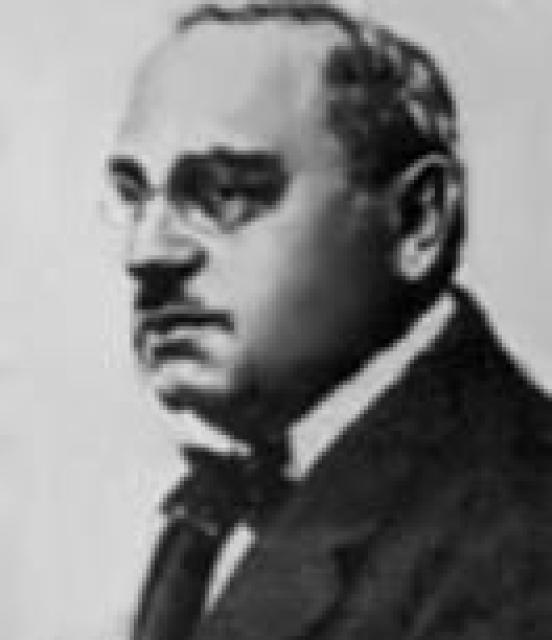
Alfred Adler
 Austria
- Biography of Alfred Adler
- Early Life and Education
- Founding Individual Psychology
- Key Concepts
- Striving for Power and Superiority
- Role of Society and Community
- Legacy
Biography of Alfred Adler
Alfred Adler (1870-1937) was an Austrian physician, psychiatrist, and psychologist who was one of the leading figures in the psychoanalytic movement of the 20th century. He is known for his development of the "individual psychology" school of thought.
Early Life and Education
Alfred Adler received his medical education at the University of Vienna in 1895. During his studies, he focused on researching psychopathological symptoms. In 1902, he became acquainted with Sigmund Freud and joined his discussion circle. However, Adler was skeptical of Freud's method of interpreting dreams and explaining psychological disorders through sexual factors. He rejected concepts such as "libido" and the "Oedipus complex".
Founding Individual Psychology
In 1907, Adler published the book "Study of the Inferiority and its Psychical Compensation", which was met with negative reviews from Freud. In 1911, Adler parted ways with Freud and founded his own direction in psychology called "individual psychology". He established the journal "Internationale Zeitschrift fur Individualpsychologie" in 1914 and the International Association of Individual Psychology in 1924. In 1926, he lectured at Columbia University.
Key Concepts
Adler believed that human psychology is determined by factors of a special order and cannot be reduced to physiological or biological causes. He argued that pure causality only applies to inanimate objects and is insufficient to explain human life. Instead, Adler emphasized the importance of goals and purpose in understanding psychological processes and individual behavior.
Striving for Power and Superiority
According to Adler, the general goal of every individual is to strive for power and superiority, which can take various forms in different situations. This goal is predetermined by the fundamental fact that every person feels inferior compared to their parents, siblings, and peers. The pursuit of superiority is aimed at compensating for this pervasive feeling of inferiority and can sometimes manifest as unhealthy overcompensation, as seen in neurotic individuals.
Role of Society and Community
Adler believed that understanding a person requires considering their relationship with society and the cultural context in which they live. He emphasized the importance of social interest and the need to fulfill socially established tasks. While striving for personal power can sometimes undermine a person's sense of community, Adler recognized the inherent need for unity and the role of love, work, and human connection in leading a meaningful life.
Legacy
Alfred Adler's social-psychological orientation influenced the theoretical concepts of neo-Freudian psychologists such as Harry Stack Sullivan, Karen Horney, and Erich Fromm. However, the "individual psychology" school, which reached its peak of popularity in the 1920s, gradually lost its influence as a scientific movement. Adler's works, including "Menschenkenntnis" and "Social Interest: A Challenge to Mankind", continue to be studied and appreciated for their unique perspectives on human psychology.