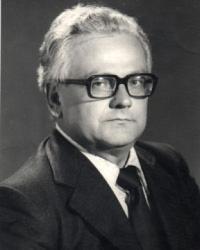
Alfred Blalock
 USA
USAAlfred Blalock: Biography of an American Surgeon
Early Life and EducationAlfred Blalock was born on April 5, 1899, in Culloden, Georgia. At the age of 14, he began his education at the Georgia Military Academy, preparing to attend the University of Georgia. He completed his studies with a bachelor's degree in 1918 and then enrolled in Johns Hopkins Medical School. It was there that his long-lasting friendship with Tinsley Harrison began. Blalock obtained his medical degree in 1922 and spent the next three years in Baltimore, completing his residency in urology and working as an assistant in general surgical service.

Career and Contributions
Blalock's career took a significant turn when he moved to Boston and became a surgeon at Peter Bent Brigham Hospital. However, he later transitioned to Vanderbilt University for private research. During his time at Vanderbilt, Blalock played an active role in teaching third and fourth-year medical students, which helped him become the head of the surgical research laboratory. It was at Vanderbilt that he conducted important research on the nature and treatment of hemorrhagic and traumatic shock, experimenting on dogs. His findings led him to advocate for the use of blood plasma and whole blood components as treatment for surgical shock, saving countless lives during World War II.

Unfortunately, Blalock faced frequent bouts of tuberculosis during his tenure at Vanderbilt. As a result, his first research on shock states, conducted in 1927, was actually compiled and written by Harrison based on Blalock's investigations. Blalock's health challenges, however, did not deter his determination to make groundbreaking advancements in the field of surgery.
In 1938, Blalock attempted to perform palliative cardiac surgeries, experimenting with connecting the left subclavian artery to the left pulmonary artery. While these experiments were unsuccessful in their intended purpose, Blalock would return to this idea years later.
When offered the position of chief of surgery at Johns Hopkins Hospital in 1941, Blalock requested that his assistant, Vivien Thomas, work alongside him. Their close relationship would last for over 30 years. In 1944, together with Helen Taussig, Blalock successfully performed the world's first operation on a 15-month-old girl using an anastomosis. This procedure allowed blood to flow from the left ventricle to the pulmonary circulation, and it became known as the Blalock-Taussig Anastomosis. This marked not only the saving of thousands of lives but also the beginning of the modern era of cardiac surgery.
Later Years and Legacy
Alfred Blalock passed away on September 15, 1964, after battling cancer. In 2003, the PBS television network's program "American Experience" presented a documentary film titled "Partners of the Heart," which depicted the fruitful collaboration between Blalock and Vivien Thomas at Vanderbilt University and Johns Hopkins University. In 2004, this project received the Erik Barnouw Award from the Organization of American Historians for being the "Best Historical Documentary Film."
The 2004 docudrama "Something the Lord Made," in which Blalock was portrayed by Alan Rickman, won an Emmy and the George Foster Peabody Award. As of 2004, surgeons in the United States performed over 1.75 million heart surgeries annually, a testament to the lasting impact of Alfred Blalock's contributions to the field of medicine.