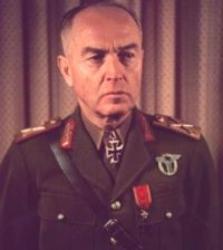
Alfred Schlieffen
 Germany
Graf Alfred von Schlieffen
Early Life and Military CareerAlfred Graf von Schlieffen was born into a military family in 1833. After completing his civilian education, he joined the Prussian Army as an enlisted officer in the 2nd Guard Uhlan Regiment in 1854. He soon rose through the ranks, becoming a lieutenant in the same year.
In 1861, Schlieffen graduated from the Military Academy and was assigned to the General Staff in 1863. He served in the Austro-Prussian War of 1866 and the Franco-Prussian War of 1870-71, where he displayed exceptional military acumen.
Rise to Prominence
After the Franco-Prussian War, Schlieffen continued his career in the General Staff. In 1884, he became head of a department in the Great General Staff (Grosser Generalstab). From 1888, he served as Quartermaster General and deputy to General Count Alfred von Waldersee, Chief of the General Staff.
In 1891, Schlieffen was appointed Chief of the Great General Staff, a position he held for nearly 15 years. During his tenure, he developed his famous "Strategy of Annihilation," which aimed to achieve victory by double envelopment, leading to the tactical encirclement of the enemy.
Schlieffen Plan
Schlieffen's most notable contribution was the development of the Schlieffen Plan, a detailed strategy for a two-front war against France and Russia. He believed that Germany could only succeed in such a war by launching a swift and decisive offensive on the Western Front while remaining defensive on the Eastern Front.
The Schlieffen Plan called for a massive deployment of troops on the right wing of the German army, which would sweep through Belgium and northern France to encircle the French army and force it towards the Swiss border. However, the plan had a major weakness: it left the German forces in Lorraine and Alsace-Lorraine vulnerable to a French counterattack.
Legacy
Despite its flaws, the Schlieffen Plan heavily influenced German military thinking and strategy. It formed the basis of Germany's military doctrine for decades. Schlieffen's emphasis on offensive action and the importance of surprise would later be adopted by other military strategists, including Erich von Manstein.
Alfred von Schlieffen died in 1913, but his legacy lived on. His ideas played a significant role in the outbreak and conduct of World War I, shaping the course of one of the most devastating conflicts in human history.