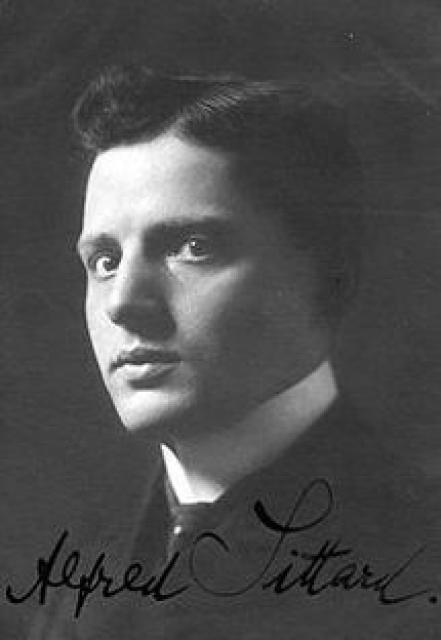
Alfred Sittard
 Germany
- Early Life and Education
- Organist and Cathedral Music
- Contributions and Legacy
- Impact on Organ Construction
Early Life and Education
Paul Sittard was born in Berlin on January 12, 1846, to noted musicologist Joseph Sittard. His early musical training commenced under his father's tutelage. Subsequently, he sought instruction from renowned Hamburg organist Karl Armbrust and cantor Wilhelm Koeler-Wumbaeker at St. Peter's Church. Sittard's formal education culminated at the Cologne Conservatory, where he studied under Friedrich Wilhelm Franke.
Organist and Cathedral Music
In 1903, Sittard was appointed organist at Dresden's Kreuzkirche. His tenure there was marked by his meticulous attention to the organ's sound and structure, which he meticulously documented in his book "Das Hauptorgelwerk und die Hilfsorgel der St.-Michaelis-Kirche in Hamburg" upon assuming the organist position at Hamburg's St. Michael's Cathedral in 1912.
Contributions and Legacy
Sittard's career as a composer yielded numerous organ and choral works. His legacy extends beyond his musical contributions. In 1925, he joined the faculty of Berlin's Hochschule für Musik, where he later became head of the Staatliche Kantorei boys' choir in 1933. Moreover, the Hochschule für Musik established a prestigious scholarship in Sittard's name in 1974.
Impact on Organ Construction
Sittard's tenure at St. Michael's Cathedral coincided with the installation of a new organ. His insights into the instrument's design and the principles of sound propagation within the cathedral's acoustics are invaluable contributions to the field of organ construction.