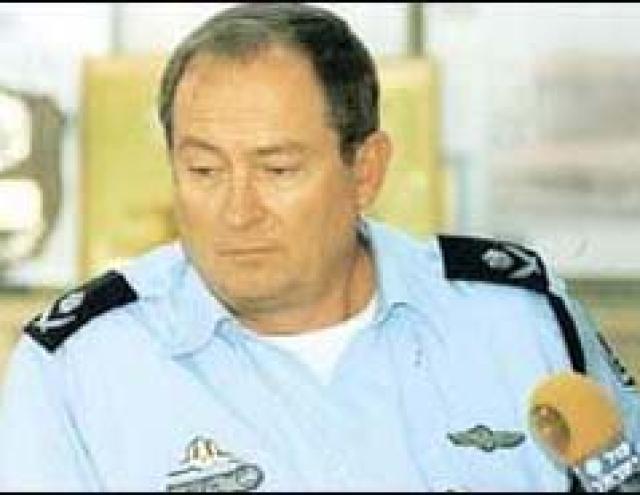
Alik Ron
- Legendary and Controversial: The Life and Times of General Alik Ron
- The Invisible Hand Behind "Geneva Accords"
- Russian Roots and Pragmatic Approach
- Engaging the Russian-Speaking Community
- Absence of Guarantees and the Urgency of Action
- Compromises and a Path to Peace
- Diplomatic Strategies and Regional Implications
- Jerusalem and the Potential for Reconciliation
- Palestinian Refugees and the Demographic Dilemma
Legendary and Controversial: The Life and Times of General Alik Ron
Rise to Prominence and Accusations of MisconductIn June 1976, General Alik Ron became a national hero following a successful hostage rescue operation in Entebbe. However, in 2003, the Or Commission accused him of exceeding his authority while suppressing Arab riots in Galilee in 2000. Ron was found unsuitable for further police service and resigned shortly before the ruling was made.
The Invisible Hand Behind "Geneva Accords"
In recent years, Ron has re-entered the public eye as a key figure in the "Geneva Accords" initiative. Despite his past reputation, Ron has positioned himself as an advocate for peace and a representative of Russian-speaking Israelis.
Russian Roots and Pragmatic Approach
Ron proudly acknowledges his Russian heritage, with his grandparents hailing from Ukraine. Although he does not speak Russian, his childhood was steeped in Russian culture and language. This background has influenced his pragmatic approach to the Israeli-Palestinian conflict, which he believes can only be resolved through separation and an end to the cycle of violence.
Engaging the Russian-Speaking Community
Ron was tasked with advocating for the "Geneva Accords" within the Russian-speaking Israeli community, despite his lack of fluency in Russian. He sees the community as highly educated and analytical, and his message resonates with their desire for peace.
Absence of Guarantees and the Urgency of Action
Ron acknowledges the absence of guarantees in the "Geneva Accords" but emphasizes that it provides a glimmer of hope that should not be squandered. He believes that the current situation is unsustainable and that an urgent need exists for a peaceful resolution.
Compromises and a Path to Peace
Ron admits that the "Geneva Accords" involve concessions from both sides, including the partition of Jerusalem and the surrender of certain territories. However, he argues that these compromises are necessary to secure peace and that they also force the Palestinians to make concessions.
Diplomatic Strategies and Regional Implications
Ron believes that Israel must appear strong in negotiations and avoid perceived weakness. He compares the situation on the Golan Heights to that of Judea and Samaria, arguing that the absence of Palestinian populations on the Golan makes it a distinct case. He also believes that Syrian President Bashar al-Assad is unlikely to initiate a war with Israel due to the threat posed by the US invasion of Iraq.
Jerusalem and the Potential for Reconciliation
Ron highlights the complexities of the Jerusalem issue, acknowledging that both Israel and the Palestinians claim control over certain areas. He emphasizes that the division outlined in the "Geneva Accords" merely reflects the current reality and that the potential for conflict over Jerusalem could ignite global tensions.
Palestinian Refugees and the Demographic Dilemma
Ron acknowledges the challenges posed by the return of Palestinian refugees but argues that it is a price worth paying for peace. He points out that refugees would have multiple options, including remaining where they are, settling in future Palestinian territories, or relocating to other countries that have expressed a willingness to accept them. Additionally, Ron argues that the granting of Israeli citizenship to 240,000 East Jerusalem Palestinians would create "vacancies" for returning refugees.


