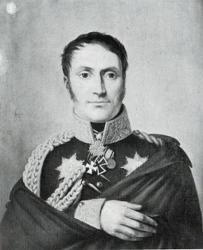
Antonio Aranda
 Spain
Spain- Early Life and Military Career
- Republican and Civil War Service
- The Siege of Oviedo
- Later Life and Post-War Career
Early Life and Military Career
Colonel Francisco Aranda was a Spanish military officer who played a significant role in the Spanish Civil War. Born in Toledo, Spain, he graduated from the Infantry School in Toledo and actively served in combat operations in Morocco. His military prowess led to promotions, including to the rank of major in 1916 and colonel in 1926. Aranda distinguished himself not only as a military commander but also as an engineer and cartographer.
Republican and Civil War Service
During the republican regime in Spain, Aranda served in the First Army Inspection. He played a part in suppressing the miners' uprising in Asturias in 1934, after which he commanded the Asturias Mountain Brigade and served as military governor of Oviedo.
The Siege of Oviedo
At the outbreak of the military uprising against the republican government in July 1936, Aranda pledged loyalty to the government over the phone. However, he was secretly involved in an anti-government conspiracy. Fearing resistance from loyalist forces in Oviedo, he declared himself a "sword of the republic" in a speech to miners, supporting their plan to aid Madrid and providing them with weapons.
However, as soon as the miners left Oviedo, Aranda led a military takeover of the city, seizing control of Oviedo and its arms factory. From July 20 onwards, he defended Oviedo against a siege by returning miner militia that gradually tightened its grip on the city. In October 1936, nationalist forces broke through from Galicia to Oviedo, lifting the siege and pushing the republicans into the city outskirts.
Later Life and Post-War Career
After the end of the Civil War, Aranda headed the Higher Military Academy and presided over the Royal Geographical Society. He maintained a pro-British stance during World War II and engaged in clandestine monarchical activities. This drew the ire of Francisco Franco, resulting in his arrest and brief exile to Mallorca in 1943.
Upon his return to Madrid, Aranda continued to hold monarchist views while being monitored by the police. He spent much of his time in the reading room of the Club Casino de Madrid. In 1976, after Franco's death, King Juan Carlos I bestowed the rank of Lieutenant General upon the 88-year-old Aranda.