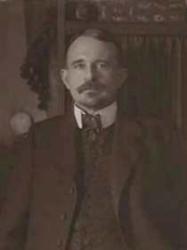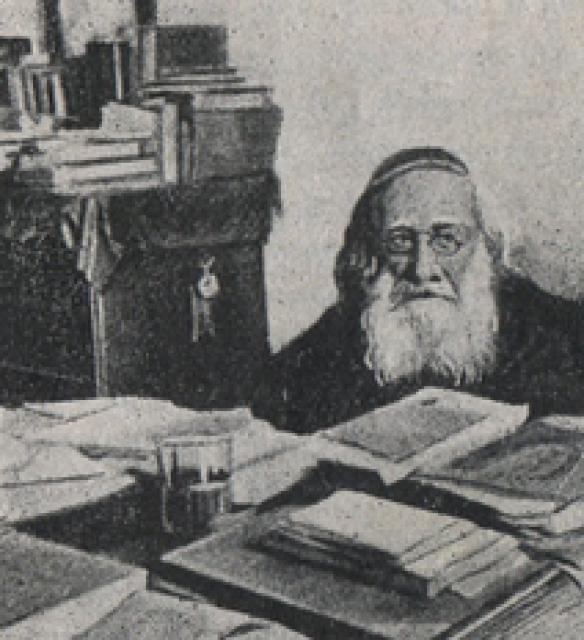
Alishan Ghevont
 Armenia
Biography of Alishan Gevond
Alishan Gevond was an Armenian poet, philologist, and historian. He was born on July 6, 1820, in Constantinople, in the family of a numismatist scholar. After studying for two years at a local Armenian Catholic elementary school, Kerovpe went to Venice, where he studied at the school of Mekhitarists, which later (since 1870) was named Murad-Raphaelian. Here he perfected his knowledge of the ancient Armenian language, Grabar, as well as Italian, English, German, and French. He also acquired extensive knowledge in history, geography, and philology.
At the age of 14, Gevond took religious vows and changed his name to Gevond (in honor of the hero of the Armenian people's national liberation struggle of 451 - the Battle of Avarayr). While still a seminary student, Alishan became a member of the Armenian Congregation of Mekhitarists. Immediately after completing his studies, he was appointed a teacher at the same school. Throughout his life, Alishan engaged in productive pedagogical activities in Venice and Paris. From 1849 to 1855, he was the editor-in-chief of the Mekhitarist Venice journal "Bazmavep."
Armenia - Caucasus From the 1850s, Gevond showed a serious interest in various areas of Armenian studies. In libraries, museums, and book depositories in different cities of Western Europe, he studied Armenian manuscripts, discovering numerous valuable materials related to the history and culture of the Armenian people. Alishan is the author of fundamental works on Armenian history, ethnography, geography, and culture, many of which have been translated into Italian, English, French, and German.
As a scholar, Alishan gained European-wide recognition. In 1866, he was awarded the Legion of Honor Order and was a member of the Italian Asian Society, the Moscow Archaeological Society, the St. Petersburg Society of Lovers of Russian Literature, the Jena Academy of Philosophy, and others.
Poetic Works
Alishan's first poetic attempts date back to the 1830s. He began publishing in 1844 in the journal "Bazmavep." Alishan's main poetic legacy is collected in five volumes published in Venice in 1857-1858. All of his poems are written in Grabar and are grouped into thematic cycles under the general title "Melodies."
Alishan's poems written in Grabar are distinguished by a wide range of themes, variety of forms and sizes, as well as lexical richness. They represent a significant phenomenon in the overall flow of artistic creativity of the Mekhitarists. However, they do not go beyond the thematic, genre, and formal features of Armenian classical poetry, following the obligatory rationalistic canons of this school. In the poem "The Lily of Shavarshan," the legend of the spread of Christianity in Armenia (2nd-4th centuries) and the martyrdom of the virgin Sandukt is warmly and lyrically narrated. Alishan was the first to introduce the principle of poetic cycles and the culture of historical and linguistic stylization into Armenian literature.
Besides numerous poems and verses, Alishan also wrote prose. His most famous novel is "Memoirs of the Armenian Homeland" (1869-1870). He translated Armenian folk songs into English and works by Byron, Gray, Milton, Longfellow, and others into Armenian, publishing anthologies such as "Anthology of English Poets" and "American Lyre."
Alishan Gevond passed away on November 9, 1901, in Venice on the island of San Lazzaro.