Alla Gorskaya
- Alla Horska: Renowned Ukrainian Artist and Dissident
- Artistic Career
- Human Rights Activism
- Tragic Death and Legacy
Alla Horska: Renowned Ukrainian Artist and Dissident
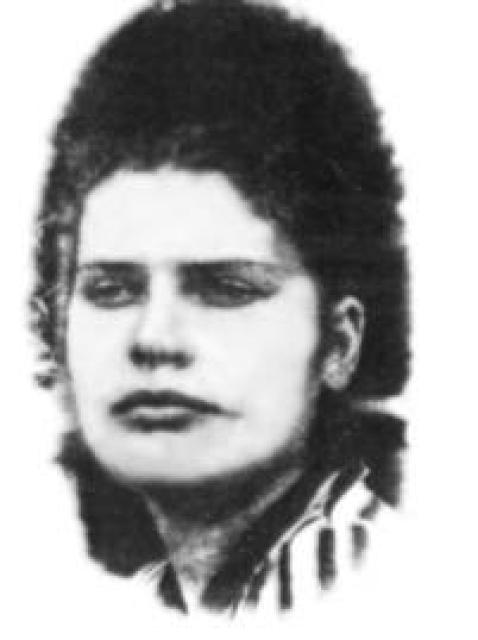
Early Life and Artistic EducationAlla Horska (1929-1970) was a renowned Ukrainian artist and an active figure in the human rights movement during the 1960s. Born in Yalta, Crimea, in 1929, she spent her formative years in Leningrad, where her father directed the Leningrad Film Studio. After surviving the siege of Leningrad during World War II, Horska and her family moved to Kyiv in 1943.
From 1946 to 1948, Horska attended the Kyiv Art School, and later enrolled in the Kyiv Art Institute. She graduated with honors in 1952, after studying under renowned Ukrainian artists such as Mykhailo Sharov and Sergiy Hryhoriev.
Artistic Career
Horska's early works were characterized by their portrayal of everyday life and Ukrainian folk traditions. In the 1960s, she became actively involved in the "thaw" period, a period of artistic and intellectual liberalization in the Soviet Union. She developed innovative stage designs for theater productions, and her 1964 витраж "Shevchenko. Mother" at the Kyiv University became a symbol of her artistic and social activism. However, the work was later destroyed by the university administration, and Horska was briefly expelled from the Union of Artists.
Horska's artwork drew inspiration from a wide range of sources, including Byzantine mosaics, Ukrainian folk art, and the modernist avant-garde. Her compositions often explored themes of national identity, history, and social justice. She is known for her poignant portraits, such as "Self-Portrait with Son" and "Portrait of Father", as well as her powerful social commentaries, such as "Bread" and "The Alphabet".
Human Rights Activism
Alongside her artistic career, Horska was an outspoken advocate for human rights. She was a founding member of the "Contemporary" club, a gathering place for Kyiv's intellectuals and artists. Together with Les Tanniuk, Vasyl Symonenko, and Ivan Svitlychny, she organized literary events and protested against political repression.
In 1962, Horska uncovered evidence of mass graves at various cemeteries in Kyiv, exposing the crimes committed by the NKVD during Stalin's Great Terror. She submitted a memorandum to the Kyiv City Council, demanding a public investigation and the identification of the victims.
Throughout the 1960s, Horska supported political prisoners, protested against the persecution of dissidents, and signed petitions demanding freedom of speech and the release of political prisoners. Her activism made her a target of the Soviet secret police, who subjected her to constant surveillance and intimidation.
Tragic Death and Legacy
In 1970, Horska was found dead under mysterious circumstances in Vasylkiv, near Kyiv. The official investigation concluded that she had been killed by her father-in-law, who then committed suicide. However, many believe that she was murdered by the KGB in retaliation for her political activism.
Alla Horska's art and activism continue to inspire and challenge. Her works are held in major museums worldwide, including the National Art Museum of Ukraine, the Museum of Modern Art in New York City, and the Tate Modern in London. Her legacy as an artist and a defender of human rights ensures that her memory will live on.