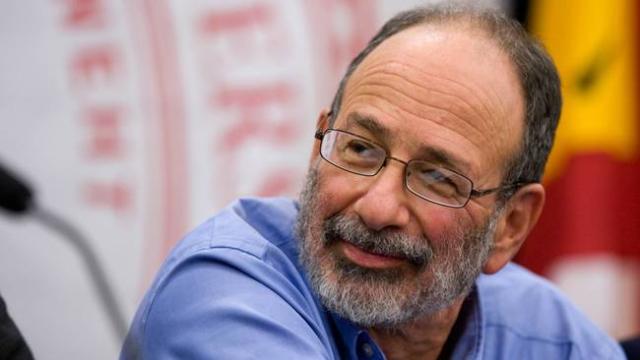
Alvin Roth
 USA
USABiography of Alvin Roth
Alvin Elliot Roth is an American scholar, economist, and professor at Stanford and Harvard. He is well-known for his significant contributions to game theory, market design, and experimental economics. Roth is also renowned for his use of economic theory to solve practical, real-life problems. He has been awarded the Nobel Prize for his groundbreaking research.

Education
Alvin Roth received his Bachelor's degree in Operations Research from the School of Engineering and Applied Science at Columbia University. He later moved to Stanford, where he obtained both a Master's degree and a Ph.D. in Operations Research. Roth specialized in the field of operations research throughout his studies.

Academic Career
After leaving Stanford, Roth taught at the University of Illinois for a period of time. In 1982, he joined the University of Pittsburgh, where he held a named professorship. Alongside his main role at Pittsburg, Roth also worked at the Center for the Philosophy of Science and one of the graduate school departments. In 1998, Roth moved to Harvard and remained there until 2012, after which he found a new position at Stanford. In 2013, Roth became a full member of the Stanford faculty and an honorary professor at Harvard.
Contributions and Achievements
In 1984, Roth published an article within the framework of the National Resident Matching Program about the system developed by John Stalknaker and F.J. Mullen. This system was based on the theoretical foundations mentioned by David Gale and Lloyd Shapley in 1962. Roth found that the system worked well for single individuals but could not provide an answer for married couples. In 1999, he made changes to the system to address this limitation, and the updated system consistently provided correct answers for both single and married individuals.
Roth's talents were also instrumental in revamping the application and admission process for senior high school students in New York. Together with his colleagues, he proposed a new algorithm that simplified and safeguarded the system from potential abuses. The algorithm was implemented in 2003 and proved to be highly beneficial. A similar system was later introduced in Boston, with similar success.
Aside from his work in economics, Roth also initiated a medical program aimed at matching incompatible pairs for kidney transplants. Finding suitable kidneys for transplantation has always been a challenging task, even when a willing donor is available. The program developed by Roth allowed for cross-matching of incompatible pairs, enabling each potential donor to donate their kidney to a stranger in exchange for a compatible kidney for their partner. Initially, the system only facilitated paired exchanges, but eventually, three-way exchanges became possible. In April 2008, the first operation involving 12 participants was successfully performed, paving the way for more complex procedures.
Alvin Roth's innovative approaches and contributions have had a significant impact on various fields, making him a highly respected figure in academia and recipient of the Nobel Prize.