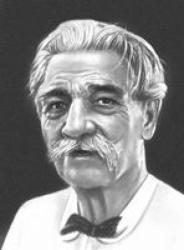
Amelius
 Italy
Italy- Amelius: A Prolific Neoplatonist
- Systematizing Plotinian Thought
- Lost Writings
- Commentaries and Interpretations
- Amelius' Triad of Nous
- The Demiurgic Mind
- Influence on Later Neoplatonism
Amelius: A Prolific Neoplatonist
Early Life and InfluencesAmelius was an ancient Neoplatonic philosopher who lived from approximately 243 to 317 AD. He was a prominent figure in the Plotinian school, serving as a close disciple of Plotinus from 246 AD. Prior to studying with Plotinus, he studied under the Stoic Lysimachus and admired the Pythagorean and Platonist Numenius.
Systematizing Plotinian Thought
Amelius played a crucial role in developing and systematizing Plotinus' teachings. He refined Plotinus' concept of the threefold nature of Nous, identifying the three principles of being, life, and thought as the basis of reality. Amelius also established the Neoplatonic dialectic of myth, connecting Platonic ideas with mythical narratives.
Lost Writings
Unfortunately, Amelius' writings have not survived. However, his works can be partially reconstructed from references in other sources. He is known to have written "On the Difference between the Doctrine of Plotinus and the Doctrine of Numenius," "On the Doubts of Porphyry," and forty books against the Gnostic Zostrinian.
Commentaries and Interpretations
Amelius also composed commentaries on Plato's "Timaeus," "Republic," "Parmenides," and "Philebus." He wrote "On Justice According to Plato" and provided an original interpretation of Plato's "Second Letter," in which he identified the three kings as three minds representing three aspects of Nous.
Amelius' Triad of Nous
Amelius' most significant contribution to Neoplatonism was his systematization of the threefold nature of Nous. He termed the three principles the first mind (being), the second mind (intelligible being), and the third mind (intelligible thinking). This triad served as the foundation for the Neoplatonic hierarchy of being.
The Demiurgic Mind
Amelius equated the triad of Nous with the three demiurges or kings described by Plato in the "Timaeus." He identified the first mind with the supreme being Uranus, the second with Cronus, and the third with Phanes. This identification personified the intellectual and creative aspects of Nous.
Influence on Later Neoplatonism
Amelius' work influenced subsequent Neoplatonists, including Iamblichus and Proclus. He established a more systematic approach to Neoplatonic thought and provided a framework for understanding the role of mind in the creation and order of the cosmos.