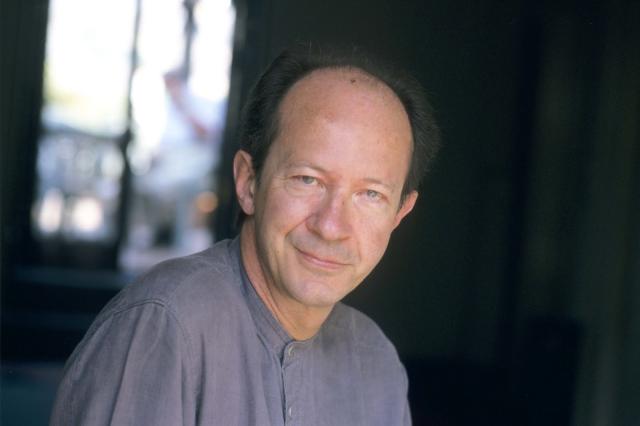
Giorgio Agamben
 Italy
Italy- Italian Philosopher
- Early Life and Influences
- Philosophical Journey
- Heideggerian and Non-Heideggerian Influences
- International Renown
- Groundbreaking Work
Italian Philosopher
Born into a Tuscan aristocratic family, Giorgio Agamben graduated in law from the University of Rome La Sapienza. His academic interests gradually shifted towards philosophy.
Early Life and Influences
In 1964, Agamben made a memorable appearance as the apostle Philip in Pier Paolo Pasolini's "The Gospel According to St. Matthew." He cultivated friendships with literary luminaries such as Elsa Morante, Alberto Moravia, and Ingeborg Bachmann. His intellectual pursuits included translations from Spanish (St. John of the Cross) and French (Alfred Jarry and the surrealists).
Philosophical Journey
Agamben's dissertation focused on Simone Weil. Encounters with Martin Heidegger's seminars in 1966 and 1968 left a profound impact. During his time in Paris, he engaged with Pierre Klossowski and Italo Calvino. A research fellowship at the Warburg Institute (1974-1975) under Frances Yates further enriched his intellectual trajectory.
Heideggerian and Non-Heideggerian Influences
While Heidegger's influence remained significant, Agamben increasingly drew inspiration from Walter Benjamin, whose works he published in Italy. Other influential thinkers included Jacob Taubes, with his writings on eschatological time and Western messianism.
International Renown
Agamben taught in the United States, France, and Germany. His work drew attention for its provocative comparison of contemporary society to a concentration camp. He introduced the notion of the Roman law concept of homo sacer as a paradigm for the modern condition: an outcast who cannot be sacrificed but may be killed with impunity.
Groundbreaking Work
Agamben's magnum opus, "The Coming Community" (1990), was hailed as a counterpoint to Francis Fukuyama's "The End of History." This work continues to inspire scholars and philosophers in the pursuit of understanding the complexities of political life.


