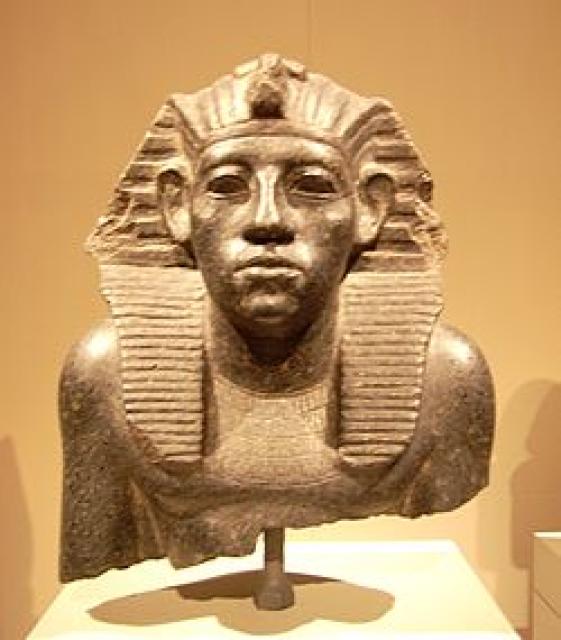
Amenemhat III
 Egypt
Egypt- Amenemhat III: A Monarch of Renown
- Modest Military Campaigns
- Extensive Building Projects
- Monumental Irrigation Works
- Faiyum City and Colossus
- The Labyrinth: A Majestic Enigma
Amenemhat III: A Monarch of Renown
Early Reign and Centralization of PowerAmenemhat III ascended to the throne as pharaoh of Ancient Egypt circa 1853 BCE during the Middle Kingdom's XII dynasty. During his reign, he significantly bolstered royal authority, effectively curtailing the powers of powerful regional governors (nomarchs) through decisive measures and reliance on loyal, non-noble military personnel.
Modest Military Campaigns
While the empire's borders had been largely secured by his predecessors, Amenemhat III's military campaigns were limited and sporadic. Inscriptions mention infrequent expeditions that targeted Nubia and Asia.
Extensive Building Projects
Amenemhat III's rule was marked by vigorous construction activity. He expanded and reinforced settlements in the Sinai Peninsula, ensuring their water supply and security. This enabled him to intensify mining operations for copper and turquoise in the region. Over 50 inscriptions from various expeditions have been found on rocks in the area, dating from the 2nd to the 45th years of his reign.
Monumental Irrigation Works
Major irrigation projects in the Faiyum Oasis, initiated by his predecessors, were completed under Amenemhat III. He constructed a massive embankment (43.5 km in length), draining a vast area of the oasis and making it suitable for agriculture.
Faiyum City and Colossus
In the Faiyum Oasis, Amenemhat III founded the flourishing city of Crocodilopolis, dedicated to the crocodile god Sebek. On the northern edge of this reclaimed land, he erected two monumental pedestals in the form of truncated pyramids, each over 6 meters high. Atop these, colossal monolithic statues of the pharaoh were placed, carved from yellow quartzite and towering 11.7 meters tall. During the Nile flood, the pedestals were partially submerged, giving the statues the appearance of seated figures amidst the lake.
The Labyrinth: A Majestic Enigma
In the Faiyum, Amenemhat III ordered the construction of an awe-inspiring stone building that astounded the Greeks. Referred to as the Labyrinth, it covered an area of 244m x 305m and comprised 3000 rooms (1500 subterranean and 1500 above ground). According to historians, its halls and passages were covered with massive stone slabs, and no wood or other materials were used in its construction. The Labyrinth is believed to have served as Amenemhat III's funerary temple. Alternatively, it may have played a role in consolidating national unity, with each room dedicated to statues of various deities from Egyptian regions. Today, only fragmentary remains of the Labyrinth survive, including fluted columns and relief fragments.


