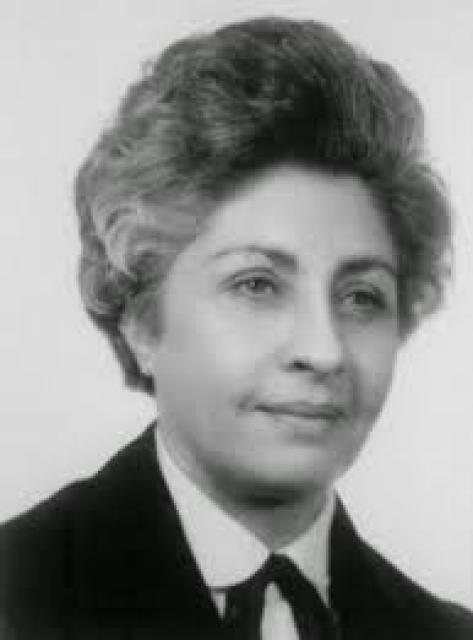
Anahita Ratebzad
 Afghanistan
- Anahita Ratebzad: A Pioneering Afghan Politician
- Personal and Professional Achievements
- Political Career
- Return to Afghanistan and Exile
- Legacy
Anahita Ratebzad: A Pioneering Afghan Politician
Early Life and EducationAnahita Ratebzad was born into an influential family in the Kabul province of Afghanistan. Her father, Ahmad Ratebzan, was a renowned writer and supporter of the Young Afghan movement. Ratebzad's early education included graduating from the "Malalai" girls' high school in 1945, followed by a nursing course. In 1947, she married Dr. Kirammudin Kakar, a doctor serving the royal household.
Personal and Professional Achievements
Ratebzad's bold decision to remove her burqa in 1961 made her the first Afghan woman to do so. She went on to pursue higher education, graduating from the medical faculty of Kabul University in 1963. Her political involvement began with her election as a member of the Afghan parliament (Wolesi Jirga) in 1965.
Political Career
In 1968, Ratebzad joined the Central Committee of the People's Democratic Party of Afghanistan (PDPA), aligning with the "Parcham" faction. Following the Saur Revolution of 1978, she was appointed Minister of Culture and head of the All Afghanistan Women's Union. Internal party struggles led to her banishment as ambassador to Yugoslavia in 1978.
Return to Afghanistan and Exile
After her recall in 1979, Ratebzad resumed living in Afghanistan until 1992. The outbreak of civil war forced her to flee to India. She eventually passed away in Germany.
Legacy
Anahita Ratebzad's contributions to Afghan society were significant. She challenged social norms, promoted women's rights, and held prominent political positions. Her life and work continue to inspire women's empowerment and political activism in Afghanistan.