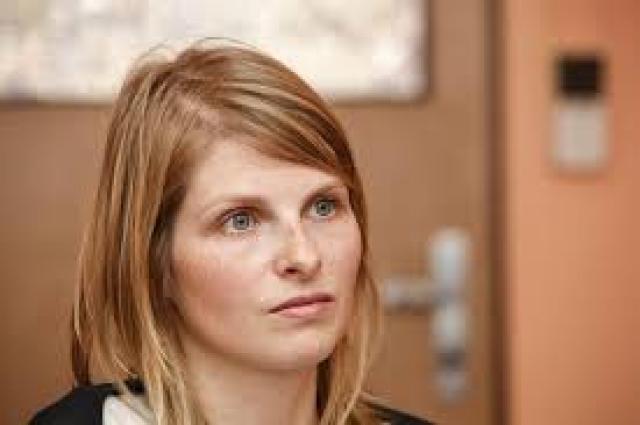
Anastasia Grishay
 Ukraine
- Childhood and Background
- Entering the Adult-Film Industry
- Leaving Ukraine and Seeking Protection
- A New Chapter in the Czech Republic
Known in adult entertainment by the stage name Wiska, Anastasia Grishay became the subject of intense public attention when her film career collided with a criminal investigation in Ukraine and a difficult effort to secure a stable future for her family in the Czech Republic. Her story moved from a short, highly visible screen career to a widely reported dispute over asylum, children and the consequences of changing laws around pornography.
Childhood and Background
Grishay was born in Gomel, then part of the Soviet Union and now in Belarus, and grew up in Feodosia in Crimea. She met Alexander Kondratenko as a teenager, and they married when she was still young. She later said she studied directing at Kyiv’s Institute of Culture for two years but left because she was balancing education with raising her first child. Accounts of her early life and career largely come from interviews she gave to Ukrainian media.
Entering the Adult-Film Industry
Before entering adult films, Grishay worked as a model. She said she accepted an offer to appear in a film in the early 2000s because she needed to support her young son. Her first reported shoot took place in Russia in 2004, and she worked under the name Wiska. Over the next several years she appeared in more than 40 films, according to contemporary reporting, including at least one production with Italian performer Rocco Siffredi.
At the height of her visibility, Grishay and her husband spoke publicly about her work and the money it brought in. That openness drew both an audience and political criticism. In 2010, a group of Ukrainian lawmakers asked prosecutors to investigate the couple, arguing that her public comments presented pornography as a profitable and acceptable business. The ensuing legal controversy placed her work and family life under unusual scrutiny.
Leaving Ukraine and Seeking Protection
Grishay said she had stopped filming by around 2008, although films made earlier continued to be released afterward. In 2010–11, she and her family left Ukraine for the Czech Republic. She said she feared arrest and feared that state agencies might separate her from her children. The details and legal status of the Ukrainian investigation were disputed in public accounts: her family described it as a serious threat, while Czech authorities reportedly concluded that the case did not establish persecution on a ground that qualified for political asylum.
The family spent years appealing negative asylum decisions. In late 2012, Grishay staged a brief topless protest outside a Czech government building, carrying the message “Save my children,” in an effort to draw attention to their situation. The protest became a widely circulated image of the case, but it did not change the asylum decision. After further appeals were rejected, the family faced the prospect of leaving the country.
A New Chapter in the Czech Republic
Grishay and her husband continued pursuing a way to remain in the Czech Republic. In 2013, after roughly two years of unsuccessful asylum applications, she and her three children were granted permanent residency on humanitarian grounds. The decision reflected the children’s schooling and the family’s growing ties to their new community. Her husband’s status was still unresolved at the time the decision was reported.
By then, Grishay had left adult entertainment behind and was living far from the public-facing career that had first made her known. Her public story is remembered less for a long filmography than for the sharp turn it took: from a performer who spoke openly about her work to a mother seeking safety and stability for her children amid a politically charged legal dispute. Reports on her later life have been limited, and she has kept a much lower profile than during the asylum campaign.