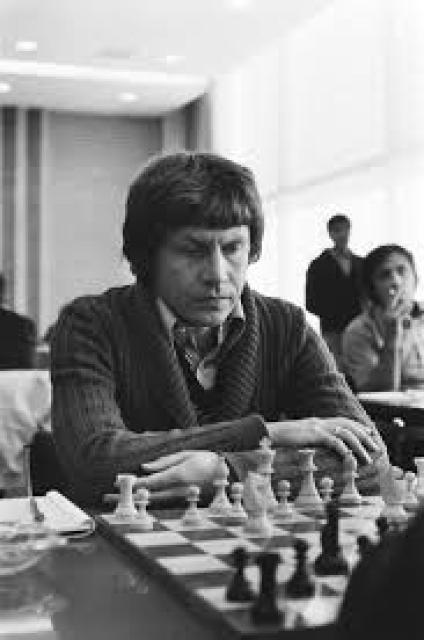
Andras Adorjan
 Hungary
Andras Adorjan: A Hungarian Writer and Grandmaster
Andras Adorjan is a renowned Hungarian writer and grandmaster. He initially competed under his real surname, but later adopted a pseudonym, using the last name of a legendary flutist of that time. His first significant victory was in 1964 at the Hungarian Championship. In 1969, Adorjan won the European Junior Championship, and in the same year, he competed for the title of World Junior Champion but was defeated by Anatoly Karpov.

In 1970, Adorjan earned the title of International Master, and in 1973, he became a grandmaster. Throughout his sporting career, Andras achieved several notable victories, including Varna in 1972, Osijek in 1978, Budapest in 1982, Gjovik in 1983, Esbjerg in 1985, and New York in 1987.
Rumors have it that in 1973, he agreed to participate in the tournament in Luhacovice as soon as he discovered the opportunity to obtain the grandmaster qualification. Adorjan learned about the tournament just an hour and a half after it began and still managed to claim first place. Adorjan excelled in team matches. In 1978, at the Chess Olympiad, he helped the Hungarian team win gold against the USSR, despite the Soviet chess players winning the previous 20 times since 1952. His performance in the subsequent Olympics in 1984, 1986, and 1988 placed the Hungarian team in the top five.
During that time, Hungary was not solely dependent on Adorjan's skill. His compatriots, Lajos Portisch and Gyula Sax, were also at the peak of their talents. Adorjan is known to have worked with both Garry Kasparov and Peter Leko, assisting them in preparation for important matches. He was renowned for his strong chess theory knowledge, particularly excelling in the Grunfeld Defense, a favorite opening of both Kasparov and Leko.
Adorjan is often remembered for his conflict with Susan Polgar, which mostly played out through the press. Polgar repeatedly stated that she had no intention of participating in a championship if Adorjan was invited.
In recent years, Andras has withdrawn from the game and focused on writing. He gained significant acclaim for his series of books on winning with the black pieces, such as "Black is OK," "Black is Still OK," and "Black is OK Forever." Adorjan also published a work on the Grunfeld Defense titled "Winning With the Grunfeld." Besides chess, he has a passion for music and even writes his own songs.