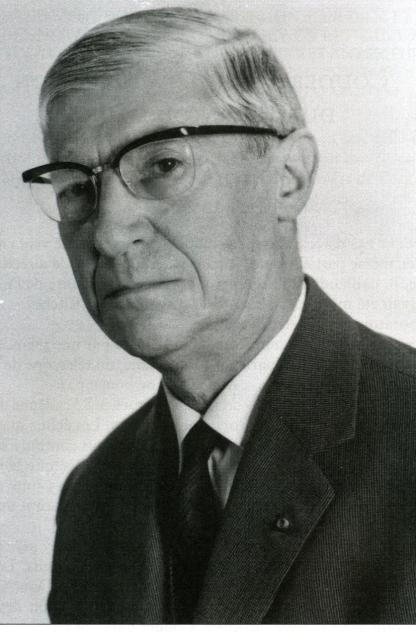
Andre Couder
 France
- Early Life and Career
- Contributions to Astronomy
- Leadership and Accomplishments
- International Recognition
- Legacy
Early Life and Career
André Couder was born in Alençon, France. Initially working as a chemist, he joined the Strasbourg Observatory in 1925. At the behest of André Danjon, he moved to Paris and became the director of the optical laboratory.
Contributions to Astronomy
Couder made significant contributions to astronomical optics and instrumentation. He developed methods to reduce optical aberrations in mirror and lens telescopes, as well as in spectrographs. He also created a mechanical system to mitigate the influence of gravity on the shape of telescope mirrors, which is still used in large telescopes today.
Leadership and Accomplishments
Couder became a member of the Paris Observatory in 1943, serving as its astronomer until 1968. He was a member of the Bureau des Longitudes in Paris from 1946 and its president from 1951-1953. In 1954, he became a member of the Paris Academy of Sciences and its president in 1968.
Couder actively participated in the establishment of several major observatories, including the Haute-Provence Observatory (president of its steering committee from 1964-1973), the European Southern Observatory, and the Mauna Kea Observatory in Hawaii.
International Recognition
Couder's work received international recognition. He was a member of the Belgian Royal Academy of Sciences, Literature, and Fine Arts, and vice president of the International Astronomical Union from 1952-1958. In 1961, he received the Grand Prix Scientifique de la Ville de Paris.
Legacy
Couder's contributions to astronomy have left a lasting legacy. He played a key role in developing astronomical optics and improving telescope technology. His system for reducing the gravitational effects on telescope mirrors remains an essential component in modern telescopes. In recognition of his achievements, a crater on the Moon is named after him.



