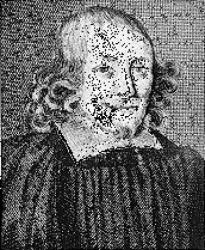
Nicolas-Louis De la Caille
 France
- Early Life and Education
- Astronomy Career
- Contributions to Mathematics and Astronomy
- Southern Hemisphere Expedition
- Constellations
- Geodesy and Cartography
- Astronomy Tables and Textbooks
- Later Years and Legacy
Early Life and Education
Nicolas Louis de Lacaille was born on March 15, 1713, in Rumigny, France. He initially pursued studies in rhetoric and philosophy at the Collège de Lizieux in Paris before transitioning to theology at the Collège de Navarre. After receiving his deacon's orders, Lacaille embarked on self-directed study in astronomy.
Astronomy Career
Lacaille's passion for science led him to Paris, where he became acquainted withrenowned astronomers Cassini and Fauchy. In 1736, he secured a position at the Paris Observatory. In 1739, he was involved in verifying the French meridian measurement between Paris and Perpignan and was appointed Professor of Mathematics at the Collège Mazarin.
Contributions to Mathematics and Astronomy
Lacaille made significant contributions to mathematics and astronomy through his textbooks, which became widely used. He was elected to the French Academy of Sciences in 1741.
Southern Hemisphere Expedition
Between 1750 and 1754, Lacaille conducted an extensive expedition to the southern hemisphere, visiting the Cape of Good Hope and the islands of Île de Bourbon (Réunion) and Île de France (Mauritius). He determined the parallax of the Moon, measured a meridian arc in southern Africa, and cataloged over 10,000 stars in the southern hemisphere.
Constellations
Lacaille played a crucial role in finalizing the division of the southern sky into constellations. He designated 14 new constellations and assigned them names related to scientific instruments and other astronomical tools. He also initiated the division of the constellation Argo Navis into three separate constellations.
Geodesy and Cartography
Lacaille also participated in numerous geodesic surveys conducted by the Paris Observatory. He collaborated with J. D. Maraldi in 1738 to map the French coastline between Nantes and Bayonne and measured a meridian arc in France between 1739 and 1741. He was the first to measure a meridian arc in South Africa and created detailed maps and determined locations of islands such as Mauritius, Réunion, and Ascension.
Astronomy Tables and Textbooks
Lacaille compiled extensive tables on atmospheric refraction and eclipses. His textbooks on mathematics, mechanics, astronomy, and optics were widely used and contributed to the spread of scientific knowledge.
Later Years and Legacy
Upon his return to Paris, Lacaille continued his work at the Collège Mazarin Observatory. He selflessly used non-controversial names for his new constellations. He was elected to the Russian Academy of Sciences (honored since 1755) and died in Paris on March 21, 1762.