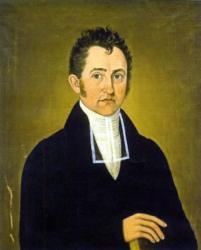
Andre Derain
 France
Biography of André Derain
André Derain, a French painter and sculptor, was born in 1880 near Paris. His father was a confectioner, but André had a passion for painting from a young age. He took his first drawing lessons from a local artist, which further fueled his interest in art. Although his parents initially wanted him to become an engineer, they eventually recognized André's undeniable talent and agreed to support his artistic pursuits.
At the age of 18, André already had an extensive knowledge of various art masterpieces. He began studying engineering at the Camillo Academy in Paris, where he met Henri Matisse, who convinced André's parents that he should pursue a career as an artist instead. This led André to enroll in the Julian Academy in 1901.
By 1905, Derain was considered one of the leading artists of the Fauvist movement, known for their vibrant and passionate works. Alongside Matisse, he traveled to the Mediterranean village of Collioure and showcased their paintings together at the Salon d'Automne. It was during this exhibition that the term "Fauvism" was coined.
During this period, Derain's early works featured bold, bright colors and blurred boundaries between objects. Some of his most famous paintings from this time include "Port" (1905-1906), "Road in the Mountains" (1907), and "The basin of London" (1906). His landscapes were characterized by an abundance of green and blue, as seen in his painting "The Thames" (1907).
Derain's encounter with Pablo Picasso had a profound influence on him, leading him to adopt a more conservative approach to color. He also drew inspiration from Paul Cézanne, incorporating elements of early Cubism into his work. In the 1920s, Derain became a prominent figure in the neoclassical movement, characterized by his precisely delineated figures and lines.
During World War I, Derain began depicting people in his paintings, most notably in his famous work "The Last Supper of Jesus" (1911). Over time, his color palette became increasingly dark. In addition to painting, Derain also devoted himself to graphic design, illustrating literary works, and exploring the fields of stage design and ceramics.
By the late 1920s, Derain had gained considerable fame and received the Carnegie Prize. He started exhibiting internationally, showcasing his work in cities such as London, Berlin, Frankfurt, Düsseldorf, New York City, and Cincinnati, Ohio. Later works by Derain showcased a more classical style.
André Derain passed away on September 10, 1954, at the age of 74. He had suffered from an eye infection that ultimately led to the loss of his vision. Today, André Derain's paintings are highly valued and worth millions of dollars.
"Art is the memory of generations, and museums are the initiation of the spirit," said André Derain.