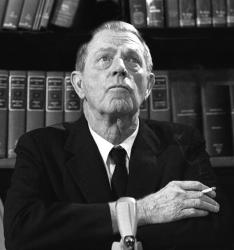
Andre Gide
 France
- Andre Gide: A Nobel Laureate's Life
- Literary Beginnings
- Aesthetic and Moral Exploration
- Political Activism and Disillusionment
- Exile and Later Years
- Literary Legacy and Post-Soviet Reception
Andre Gide: A Nobel Laureate's Life
Early Life and InfluencesAndre Paul Guillaume Gide, born in Paris on November 22, 1869, was the son of Paul Gide, a Sorbonne law professor, and Juliette Rondeaux. His childhood was marked by an unconventional upbringing primarily influenced by his female relatives. This upbringing had a lasting impact on his sexuality and gender identity.

Literary Beginnings
Gide's literary career began under the mentorship of renowned figures such as Stephane Mallarme, Oscar Wilde, and Paul Valery. His debut novel, "The Immoralist" (1902), established him as a leading voice in early 20th-century French literature.
Aesthetic and Moral Exploration
Gide's work was characterized by a relentless pursuit of artistic truth and an unconventional morality that challenged traditional social norms. He became associated with the Symbolist movement and later embraced Surrealism and other avant-garde styles.
Political Activism and Disillusionment
Gide's social consciousness led him to briefly align with left-wing ideologies. He collaborated with the Communist newspaper "Humanite" and organized the Anti-Fascist Congress in Paris. However, his visit to the Soviet Union in 1936 left him disillusioned, prompting him to renounce communism.
Exile and Later Years
During World War II, Gide fled France due to the Nazi occupation. After the war, he returned but struggled to regain his creative inspiration. He received the Nobel Prize in Literature in 1947, but the post-war literary landscape had shifted, leaving him overshadowed by other voices.
Literary Legacy and Post-Soviet Reception
Gide's work was banned in the Soviet Union for over half a century due to his critical account of his experiences there in "Return from the USSR." After the fall of the Soviet Union, there were attempts to rehabilitate him literarily, but his reputation has remained somewhat marginalized in Russian-speaking circles.