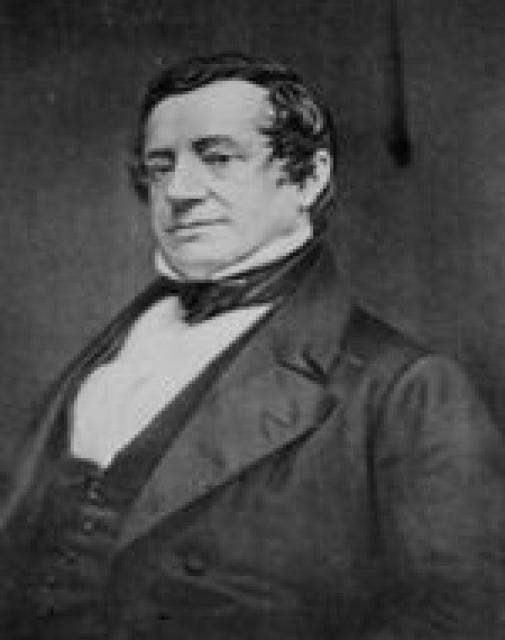
Washington Irving
 USA
USA- Washington Irving: The Father of American Prose
- Early Life and Career
- Literary Success
- Spanish Sojourn
- Legacy
Washington Irving: The Father of American Prose
Washington Irving, the renowned American writer, is widely regarded as the father of American prose. He was the first American author whose works were accessible to overseas readers and the first to acknowledge the complexities of his homeland.
Early Life and Career
Born in New York City to a wealthy family, Irving initially pursued a career in law. However, his true calling lay in writing. In 1811, he published "A History of New York, from the Beginning of the World to the End of the Dutch Dynasty," written under the pseudonym Diedrich Knickerbocker. The book was a humorous and satirical account of New York's history, featuring mock-epic battles and eccentric characters.
Literary Success
Irving's reputation as a master of the short story was cemented with the publication of works such as "Rip Van Winkle," "The Legend of Sleepy Hollow," "The Devil and Tom Walker," and "Wolfert Webber." These stories, often set in the Hudson River Valley, combined elements of folklore and the supernatural.
Spanish Sojourn
Irving spent many years in Spain as a diplomat. The country captivated his imagination, and he traveled extensively, accompanied by Russian diplomat Prince Dolgorukov. During this period, he wrote a series of books inspired by Spanish culture, including "The Alhambra," a collection of legends and sketches.
Legacy
Washington Irving's writing had a profound impact on American literature. He introduced European literary styles into American writing and played a crucial role in shaping the national identity. His works continue to be celebrated for their wit, humor, and insights into human nature.
Irving lived a comfortable and fulfilling life, marked by loyalty, education, and financial stability. Despite his success, he never lost his youthful spirit of mild rebellion, occasionally poking fun at President Thomas Jefferson's fondness for crimson plush breeches.