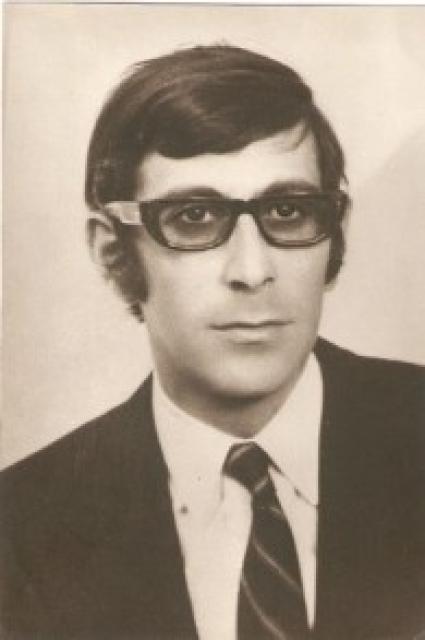
Andre Spitzer
 Israel
- Andre Spitzer: A Life Dedicated to Fencing and Peace
- Early Life and Military Service
- International Fencing and Coaching Career
- The Munich Olympics and Tragic Loss
- Hostage Situation and Demise
- Legacy
Andre Spitzer: A Life Dedicated to Fencing and Peace
Andre Spitzer, a fencer, Israel's national team coach, and one of the victims of the Munich massacre, firmly believed in the power of the Olympics to unite nations. Ironically, it was during the Olympic Games that he was killed by Palestinian terrorists.
Early Life and Military Service
Born in Romania, Andre Spitzer lost his father at the age of 11 and moved to Israel with his mother. He served in the Israeli Air Force and pursued fencing at Israel's National Sport Academy.
International Fencing and Coaching Career
In 1968, Andre traveled to the Netherlands to study fencing. He married one of his students in 1971 and returned to Israel shortly after. By age 27, he had become one of the leading fencing instructors in the country, and his efforts culminated in the establishment of the National Fencing Academy.
The Munich Olympics and Tragic Loss
In 1972, Andre and Ankie Spitzer attended the Munich Olympics, leaving their newborn daughter Anouk in the care of her grandparents in the Netherlands. For Andre, the Olympics represented more than just a sporting event; he saw it as an opportunity to bridge the gap between warring nations.
During the Games, the Spitzes had to return to the Netherlands due to their daughter's illness. Andre rushed back to join the Games and missed his train. His wife risked her life to catch a train at an intermediate station, enabling Andre to continue his journey.
Andre arrived in Munich just four hours before the terrorist attack. Palestinian terrorists broke into the Israeli team's quarters, killing coach Moshe Weinberg and weightlifter Yossef Romano and taking nine athletes hostage, including Andre.
Hostage Situation and Demise
Andre was last seen alive in a window, wearing a white T-shirt and bound at the wrists. While negotiating, he seemed to share information that the terrorists preferred to keep hidden, resulting in an AK-47 buttstock blow to his head.
After 20 hours of tense negotiations, the hostages and terrorists boarded a helicopter to Fürstenfeldbruck. The terrorists were to be flown to Arab territory on a jet aircraft. However, a poorly planned rescue operation by Bavarian border guards and Munich police escalated into a shootout.
After two hours of gunfire, four of Andre's friends were executed; the terrorists killed the remaining hostages shortly after. Along with the athletes, five terrorists and one German police officer were killed.
Legacy
Andre Spitzer was buried in Tel Aviv, Israel. After his death, Ankie Spitzer decided to stay in Israel with their daughter, despite having no family there and limited knowledge of the language. She later converted to Judaism. As Ankie explained, in Amsterdam, she would never have been able to fully explain to her daughter who her father was, but in Israel, there was no need for further explanation.