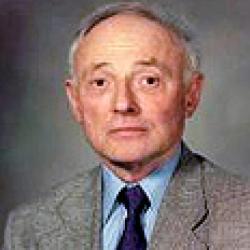
Andre Weil
 France
Biography of Andre Weil
Andre Weil was a French mathematician, widely regarded as one of the greatest scientists of the 20th century. He was born into a Jewish family in Alsace. Weil completed his education at the prestigious École Normale Supérieure, where he co-founded a group with other students including A. Cartan, C. Chevalley, J. Dieudonné, which later became famous as Nicolas Bourbaki.
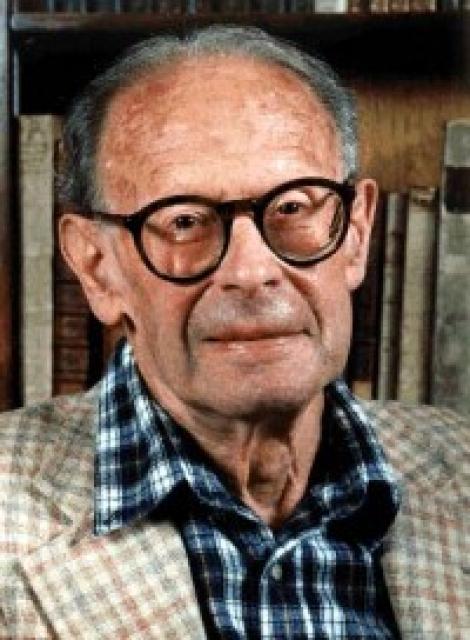
During World War II, Weil emigrated to the United States, where he worked at the University of Chicago and the Institute for Advanced Study in Princeton. He is well-known for his groundbreaking work in algebraic geometry, which he rigorously established. He also made significant contributions to functional analysis, particularly in the theory of measure and integration in topological groups, and primarily in the field of number theory, where he applied the tools of homological algebra and functional analysis. Weil's hypotheses, which suggested a connection between the discrete world of algebraic varieties and the continuous world of topology, played a crucial role in the further development of mathematics and were mainly proven by A. Grothendieck and P. Deligne.
Weil was greatly influenced by the philosophy of structuralism, which he became acquainted with through his personal relationship with C. Levi-Strauss. He wrote a mathematical appendix to Levi-Strauss' book "The Elementary Structures of Kinship". Weil, along with the other members of Bourbaki, believed that mathematics is the study of mathematical structures. He was awarded the Wolf Prize in 1979 for his contributions to mathematics. Weil's sister, Simone Weil, was a well-known philosopher. Although he wrote an article with C. Chevalley on the work of the famous mathematician Hermann Weyl, Andre Weil was not related to him.