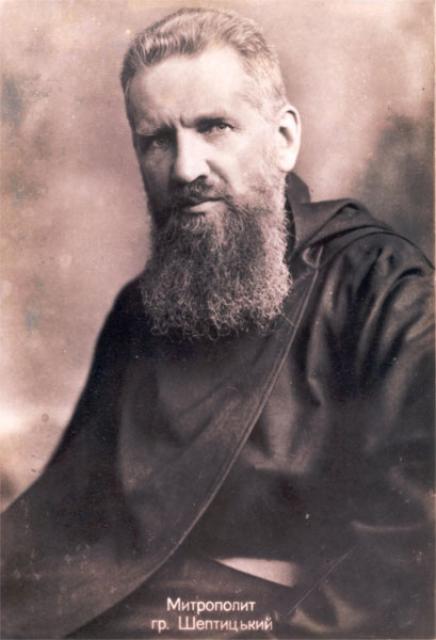
Andrey Sheptitskiy
 Ukraine
- Early Life and Education
- Military Service and Legal Studies
- Entrance into Monastic Life
- Bishop to Metropolitan
- Political Involvement and Ecclesiastical Reforms
- During World War I
- Post-War Activities
- World War II and Controversies
- Collaboration and Rescue Efforts
- Post-War Years and Legacy
Early Life and Education
Andrei Sheptytsky was born on 29 July 1865, in the town of Pryłbychi in the Kingdom of Galicia and Lodomeria, part of the Austrian-Hungarian Empire (present-day Ukraine). He was a descendant of a Polish noble family. Sheptytsky received his early education at home before moving to Cracow to complete his studies.
Military Service and Legal Studies
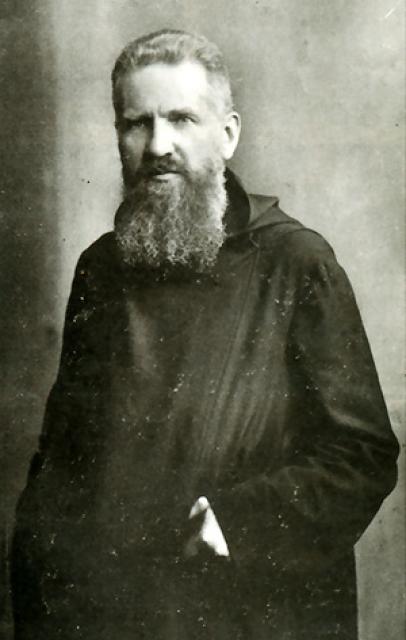
After completing his secondary education, Sheptytsky briefly served in the Austro-Hungarian Army but was forced to leave due to health reasons. He went on to pursue law at the University of Wrocław, where he earned his doctorate in law in 1888. During his studies, Sheptytsky traveled extensively, visiting Italy, Rome, Kiev, and Moscow, where he engaged with Ukrainian nationalistic and religious figures.
Entrance into Monastic Life
In 1888, Sheptytsky entered the Basilica Order of Saint Basil the Great, adopting the name Andrew. He was ordained a priest in 1892 and served as a pastor in Przemyśl and Dobromyl. In 1894, he earned his doctorate in theology from the Jesuit Seminary in Cracow. Sheptytsky ascended the church hierarchy, becoming the abbot of the Monastery of Saint Onuphrius in Lviv in 1896.
Bishop to Metropolitan
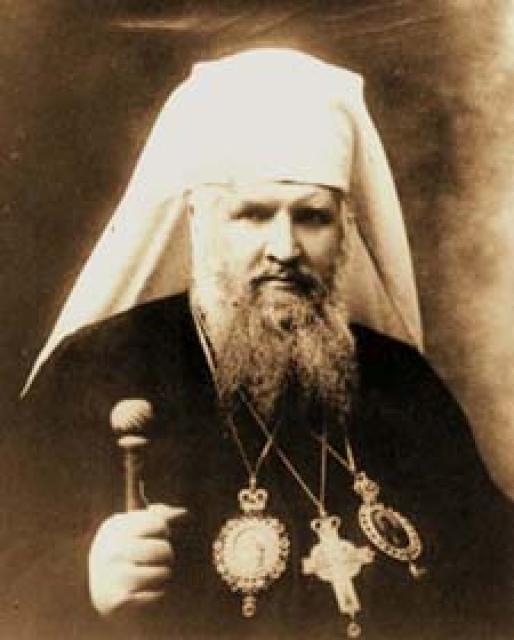
In 1899, Emperor Franz Joseph I of Austria-Hungary appointed Sheptytsky as the Bishop of Stanisławów. He was consecrated a bishop in Rome the following year. On 17 December 1900, Sheptytsky was elevated to the rank of Metropolitan Archbishop of Lviv and Bishop of Kamianets-Podilskyi, an office he held until his death.
Political Involvement and Ecclesiastical Reforms
In addition to his clerical duties, Sheptytsky was deeply involved in politics. He served as a deputy in the Galician Sejm and the Austrian House of Lords. After becoming the head of the Ukrainian Greek Catholic Church, Sheptytsky implemented a "personnel revolution," ensuring that only those who shared anti-Russian sentiments were admitted to theological seminaries.
During World War I
When Russian forces occupied Lviv during World War I, Sheptytsky remained in the city with his congregation. In 1914, he was arrested by Russian military authorities for alleged anti-Russian propaganda and exiled to Russia. He spent time in Kiev, Novgorod, Kursk, and the Spaso-Yevfimiev Monastery in Suzdal. After the February Revolution in 1917, Sheptytsky was released from prison and returned to Lviv.
Post-War Activities
Following the war and the collapse of Austria-Hungary, Sheptytsky supported the idea of an independent Western Ukraine. However, his stance on the issue led to multiple arrests by Polish authorities. Despite these setbacks, Sheptytsky continued to lead and develop his church, earning respect and admiration from both Ukrainian and Jewish communities.
World War II and Controversies
Sheptytsky's role during World War II remains a subject of debate. Initially, he welcomed the German occupation of Lviv in 1941. However, he later condemned Nazi atrocities against the Jews and other ethnic groups. Some historians argue that his initial cooperation with the Germans stemmed from his disdain for Soviet policies in Western Ukraine and his personal experiences, which included the deaths of his family members at the hands of the NKVD.
Collaboration and Rescue Efforts
Despite his initial support for the German invasion, Sheptytsky played a crucial role in saving the lives of many Jews. He founded the Committee for the Rescue of Children, which sheltered Jewish children and orphans in monasteries and churches throughout the region. He also organized the transfer of thousands of Jewish refugees to Hungary, where they were relatively safer.
Post-War Years and Legacy
In 1944, as the Soviet Army approached Lviv, Sheptytsky sent a congratulatory message to Joseph Stalin and a delegation to Moscow to establish contact with the new authorities. Sheptytsky died in Lviv on 1 November 1944, and his body was interred in the crypt of St. George's Cathedral.
The legacy of Andrei Sheptytsky is complex and multifaceted. He was a controversial figure whose actions during World War II have been widely debated. However, his humanitarian efforts, including his role in saving Jewish lives, have earned him recognition as a righteous man among many Jewish organizations. The process for his beatification by the Catholic Church is ongoing.
In 1981, a commission of the Yad Vashem Holocaust museum in Israel declined to recognize Sheptytsky as a "Righteous Among the Nations" due to his alleged collaboration with the German occupiers. However, the Jewish community of Ukraine later recognized him as such in 2008.


