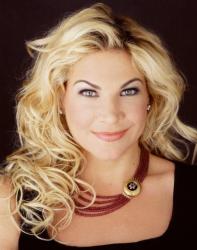
Angela Gheorghiu
 Romania
- Early life and musical training
- The role that brought her to a wider public
- Recordings and recognition
- Life beyond the stage
- A career shaped by voice and presence
Angela Gheorghiu is a Romanian soprano whose expressive performances and striking stage presence made her one of the most recognizable opera stars of her generation. Her international career took off with a 1992 appearance at London’s Royal Opera House, and she became especially associated with the heroines of Puccini and Verdi. From Covent Garden to the Metropolitan Opera and La Scala, she built a wide-ranging career on stage and in the recording studio.
Early life and musical training
Born Angela Burlacu on September 7, 1965, in Adjud, Romania, she grew up with an early interest in singing. She moved to Bucharest for specialist musical education, attending the city’s music high school before graduating from the National University of Music Bucharest. There she studied with voice teacher Mia Barbu, developing the technique that would support a demanding international opera career.
After beginning her professional work in Romania, Gheorghiu attracted wider attention in 1992 with her Royal Opera House debut as Mimì in La bohème. That same year she appeared at the Vienna State Opera, and in 1993 she made her Metropolitan Opera debut in New York, also as Mimì. These engagements quickly established her as a rising lyric soprano on the international circuit.
The role that brought her to a wider public
A defining moment came in 1994, when she sang Violetta in Verdi’s La traviata at the Royal Opera House under conductor Georg Solti. The production was broadcast live by the BBC, exposing her to a vast audience and turning a major operatic debut into an international event. Her portrayal combined vocal delicacy with dramatic intensity, qualities that became central to her appeal.
Gheorghiu went on to perform a broad repertory, including Mimì, Violetta, Tosca, Adriana Lecouvreur, Magda in La rondine, and Juliette in Roméo et Juliette. She became a regular presence at leading opera houses, among them the Metropolitan Opera, La Scala in Milan, the Vienna State Opera, and the Paris Opera. While Puccini and Verdi roles remained especially important to her, she also performed French and other Italian repertoire, appearing in concerts and opera films as well as live productions.
Recordings and recognition
Her recording career has included complete operas, recitals, and albums of arias, released through labels including Decca and EMI, later part of Warner Classics. Her 1997 recording of Puccini’s La rondine received major critical recognition, and her releases have earned awards including Gramophone honors. She was named Female Artist of the Year at the Classical BRIT Awards in 2001 and 2010. In addition to musical honors, she has received French cultural distinctions and honorary academic titles in Romania.
Her recorded work helped carry her interpretations beyond the opera house, while her glamorous public image made her a familiar figure in media coverage of classical music. The label “diva” has often followed her, reflecting both her distinctive stage persona and the attention surrounding her strong opinions and high-profile career. She has spoken openly in interviews about the intensity of performance and the standards she sets for herself, presenting artistry as a central commitment rather than simply a public spectacle.
Life beyond the stage
Gheorghiu’s personal life has sometimes intersected with her professional one. She married tenor Roberto Alagna in 1996, and the two appeared together in productions and recordings. Their relationship ended in divorce in 2013. She has a daughter, Ioana, from her earlier marriage to Andrei Gheorghiu.
A career shaped by voice and presence
Across decades on the world’s major stages, Gheorghiu has remained closely identified with roles that demand both vocal beauty and a compelling dramatic character. Her distinctive sound, emotionally direct acting, and strong relationship with audiences helped make her a prominent ambassador for Romanian music internationally. Her work in opera, film, and recordings continues to define a career built around the expressive power of the soprano voice.