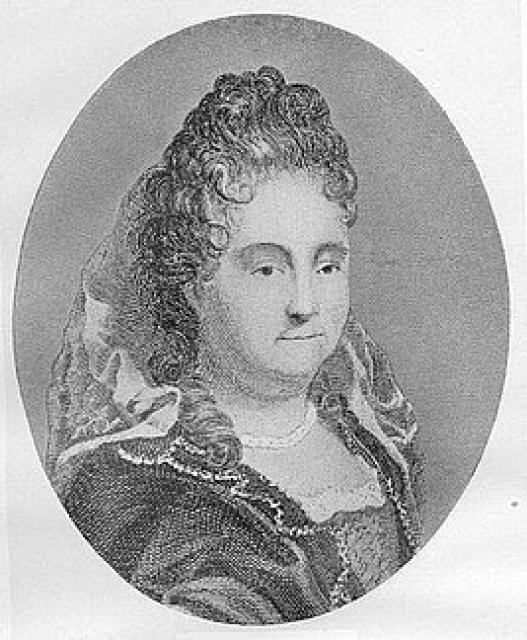
Anne Dacier
 France
- Anna Dacier, French Classicist and Translator
- Literary Collaboration and Marriage
- Pioneering Translations
- The Iliad Controversy
- "Causes of the Corruption of Taste"
- Resolution and Legacy
Anna Dacier, French Classicist and Translator
Early Life and EducationAnna Dacier, born into a family of renowned philologists, was the daughter of Tannery Lefèvre and wife of his student, André Dacier. After her father's passing in 1672, she left Saumur for Paris, bringing with her unpublished materials for a new translation of Callimachus' poetry.
Literary Collaboration and Marriage
In Paris, Dacier and her husband worked together on re-editing new editions of Roman authors. Their partnership evolved into marriage in 1683. Collaboratively, they refined the works of Sappho, Anacreon, Aristophanes, Terence, and Plautus.
Pioneering Translations
Dacier's prolific prose translations from ancient Greek and Roman literature emerged from 1681 onwards. Her adaptation of Homer's epics, "Iliad" (1699) and "Odyssey" (1708), broke new ground, making Homer's poetry accessible to a wider French audience.
The Iliad Controversy
Dacier's Homeric translations sparked a notable debate with Antoine Houdar de La Motte. La Motte published a poetic adaptation of Dacier's "Iliad" in 1714, significantly condensing and altering it. La Motte argued that modern literature surpassed classical works and justified adapting them to contemporary tastes.
"Causes of the Corruption of Taste"
In response, Dacier penned "Des causes de la corruption du goût," a scathing pamphlet that rejected La Motte's views. Despite the escalating tensions, La Motte responded with restraint in "Réflexions sur la critique" (1716), while Jean Terrasson defended his stance from a philosophical perspective.
Resolution and Legacy
The debate reached its resolution with Claude Buffier's "Homère en jugement," a conciliatory work that acknowledged the merits of both Dacier and La Motte. The public dispute ended with a toast to Homer at a dinner on April 5, 1716, although each participant maintained their initial positions. Anna Dacier's remarkable contributions as a classicist and translator left a lasting impact on French literary history.



