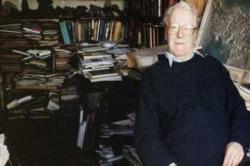
Annette Laming-Emperaire
 France
- Annette Laming-Emperaire
- Early Life and Education
- Archaeological Career
- Excavations in Brazil
- Tragic End
Annette Laming-Emperaire
Annette Laming-Emperaire was a renowned French archaeologist known for her groundbreaking work on pre-Columbian Brazil.
Early Life and Education
Born in Petrograd, Russia, Laming-Emperaire fled with her family to France after the revolution. In Paris, she initially studied philosophy before turning to teaching during World War II, while simultaneously participating in the French Resistance. After the war, she pursued her passion for archaeology, specializing in cave art.
Archaeological Career
Her doctoral dissertation, supervised by renowned archaeologist André Leroi-Gourhan, examined the significance of Paleolithic cave art. It was published in 1962. Laming-Emperaire married fellow archaeologist Joseph Emperaire, a disciple of Paul Rivet, who advanced the theory of South Asian migration to South America, bypassing North America. The couple collaborated in excavations in Brazil, Argentina, and Chile.
Excavations in Brazil
In the early 1970s, Laming-Emperaire returned to Brazil, focusing on six sites in the Lagoa Santa region, where Danish paleontologist Peter Wilhelm Lund had conducted excavations a century earlier. In 1974-1975, she discovered a cave dwelling at Site IV, yielding the oldest human remains in Brazil—the Lapa Vermelha IV hominid 1, dating back approximately 11,000 years. The skull was named Luzia.
Tragic End
In a tragic accident, Laming-Emperaire lost her life while on vacation in the Brazilian state of Paraná. She was poisoned by gas from a faulty water heater in her shower. Her excavations were halted until 1979 when her assistant André Prous returned to Lapa Vermelha IV and took over the project.