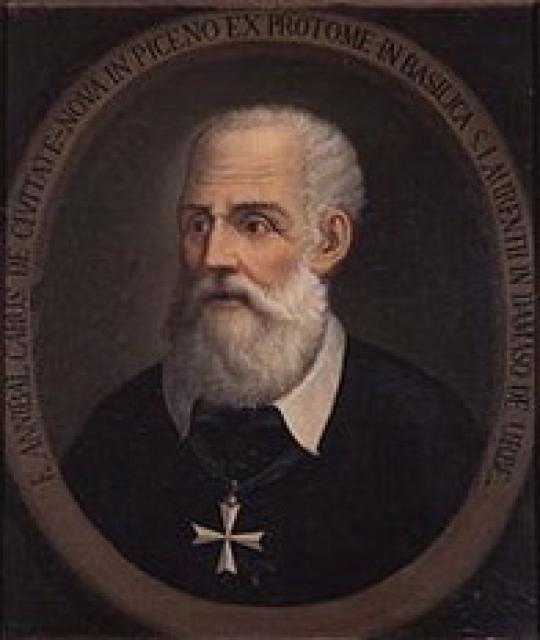
Annibale Caro
 Italy
Italy- A Life of Letters: The Legacy of Annibale Caro
- Artistic Collaborations in Rome
- Diplomatic Entanglements
- Literary Achievements
- Epistolary Elegance
- Vasari's "Lives" and Caro's Legacy
- Final Years and Legacy
A Life of Letters: The Legacy of Annibale Caro
Early Life and EducationAnnibale Caro, a prominent Italian writer of the 16th century, was born into a humble family of apothecaries. He initially studied under the renowned humanist Rodolfo Iracinto before completing his education in Florence. Throughout his formative years, Caro cultivated a close friendship with the writer Benedetto Varchi.
Artistic Collaborations in Rome
In 1530, Caro relocated to Rome, where he entered the service of Monsignor Giovanni Gaddi. Within this literary circle, he engaged with members of the Accademia dei Vignaiuoli, including Francesco Berni, Francesco Molza, and Claudio Tolomei. A subsequent journey to Naples brought him into contact with Bernardo Tasso and Bernardino Telesio.
Diplomatic Entanglements
Caro's literary pursuits were complemented by his role as a diplomat in the service of Pier Luigi Farnese, the son of Pope Paul III. From 1542 onwards, he carried out diplomatic missions on Farnese's behalf. Following his patron's assassination in 1547, Caro continued to serve Farnese's son, Cardinal Alessandro Farnese.
Literary Achievements
Caro's literary output was both prolific and diverse. He masterfully translated Longus's novel "Daphnis and Chloe" and penned the famous canzone "Venite all'ombra de'gran gigli d'oro" in praise of the House of Valois. His 1581 translation of Virgil's "Aeneid" in blank verse showcased his exceptional command of language. Additionally, Caro's plays, such as "Gli Straccioni," and his collection of poems, "Rime," further cemented his reputation as a literary giant.
Epistolary Elegance
Caro's epistolary writings, collected in "Lettere familiari," were highly esteemed by contemporaries, including Michel de Montaigne. His astute observations and vivid descriptions provide valuable insights into the cultural and historical landscape of his time.
Vasari's "Lives" and Caro's Legacy
In a letter to Giorgio Vasari, Caro praised the literary merit of Vasari's manuscript "Lives of the Artists." His astute assessment recognized the enduring significance of Vasari's work, contributing to its legacy as a foundational text in art history.
Final Years and Legacy
Retiring from public life in 1563, Caro spent his remaining years at his villa in Frascati. Upon his death, he was laid to rest in the Basilica of San Lorenzo in Damaso in Rome. Annibale Caro's literary achievements have left an enduring mark on Italian literature, cementing his status as one of the preeminent figures of the Renaissance era.