
Anson Dorrance
 USA
USA- Early Life and Education
- Coaching Career
- Coaching Success
- National Team Coach
- Sexual Harassment Allegations
Early Life and Education
Anson Dorrance was born on April 9th, 1951, in Bombay, India, to an American oil company executive. Growing up, Dorrance's family moved frequently, exposing him to various parts of Europe and Africa. Three locations had a profound impact on him: Addis Ababa, Ethiopia, where he met his future wife, M'Liss Gary; Kenya, where he developed a passion for soccer; and Fribourg, Switzerland, where he received his secondary education.

After graduating high school, Dorrance moved to the United States, attending St. Mary's University in San Antonio, Texas, before transferring to the University of North Carolina at Chapel Hill. He continued playing soccer, excelling in the sport. In 1974, he graduated with a Bachelor's degree in English and Philosophy and married M'Liss Gary.
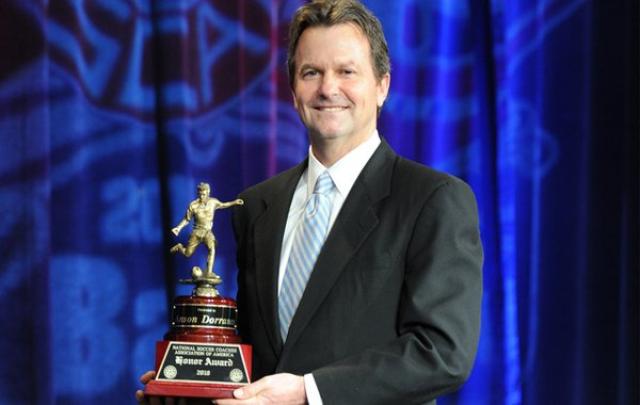
Coaching Career
Upon his father's encouragement, Dorrance pursued law, attending both Central University of North Carolina School of Law and University of North Carolina School of Law. However, in the same year, his former college coach, Marvin Allen, convinced Dorrance to succeed him as head coach of the university's men's soccer team. Dorrance held the position from 1977 to 1988, leading the team to the Atlantic Coast Conference Championship and the NCAA Final Four in 1987. He was also named NCAA National Coach of the Year that year.
In 1979, Dorrance assumed the additional responsibility of coaching the women's team, a move that would ultimately define his career. Within two years, he guided the "Lady Tar Heels" into the Association for Intercollegiate Athletics for Women (AIAW). With Dorrance and Colorado's coach Chris Lidstone leading the charge, the AIAW forced the NCAA to recognize women's soccer as a championship sport.
Once women's soccer gained official recognition, Dorrance's team dominated the field. From 1982 to 1984 and 1986 to 1988, his teams won national championships in every season. After their 2009 NCAA championship, the Lady Tar Heels had amassed 22 national titles and 21 NCAA tournament wins out of a possible 29.
Coaching Success
Several factors contributed to Dorrance's success. He possessed an uncanny talent for recruiting exceptional athletes, emphasizing a competitive spirit that he believed was often lacking in women. He fostered a highly competitive environment within his team, encouraging aggression and a relentless desire to win. However, he also understood the importance of creating a sense of camaraderie and family within the team. Observers and rivals alike noted that Dorrance unleashed a level of aggression, bordering on brutality, that had never before been seen in women's sports.
National Team Coach
Dorrance's success at the university level led to his appointment as head coach of the United States women's national team in 1986. He successfully juggled the responsibilities of coaching both teams, winning another NCAA championship with his university team in 1991 while leading the national team to the World Cup title. Dorrance nurtured a generation of successful players, including Michelle Akers, Mia Hamm, and Kristine Lilly.
Sexual Harassment Allegations
In 1998, one of Dorrance's former players, Melissa Jennings, accused him of sexual harassment. The lawsuit, initially dismissed as retaliation for Jennings' dismissal from the team, was later joined by another former player, former team captain Debbie Keller Hill. After a six-year legal battle, a judge ruled that the conduct did not constitute actionable sexual harassment. The verdict was overturned, but it took several more years for Jennings to prevail. A new judge ruled that Dorrance's actions went beyond playful joking and constituted harassment. The case was finally settled out of court on January 14th, 2008. Jennings received $385,000, and the university overhauled its sexual harassment policies, hiring a law professor to address the issue. The coach also issued written apologies to the victim, her family, and team members.



