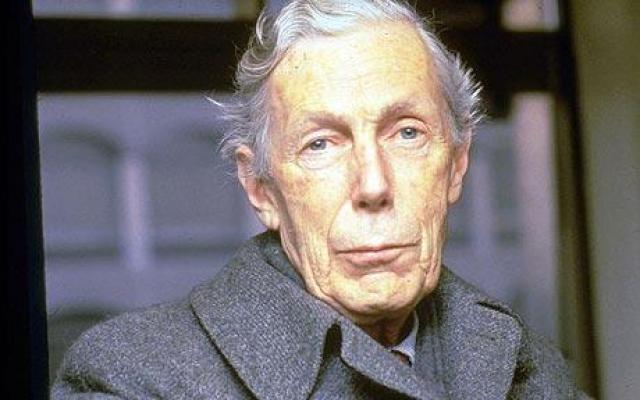
Anthony Blunt
 Great Britain
Soviet Spy
During World War II, Blunt, while working for MI5, passed secret documents to Moscow. The published memoirs of the spy, who was the fourth member of the "Cambridge Five," shed new light on the biggest security scandal of the 20th century. Blunt's memoirs were deposited at the British Library in 1984, a year after his death. According to the agreement, the records were to remain secret for 25 years. The published memoirs prove Blunt's guilt - his involvement in what he called the "Russian nightmare." Blunt was appointed as an advisor to King George VI and continued in his role during the reign of the queen. In 1956, Anthony became a Commander of the Victorian Order and received a knighthood. When irrefutable evidence emerged of Blunt's involvement with the "Cambridge Five" - the core of the Soviet spy network in the UK - the spy admitted his guilt in exchange for immunity from prosecution. Blunt was also allowed to continue living a privileged life as an art historian. Anthony died of a heart attack in 1983, four years after the new Prime Minister Margaret Thatcher revealed his spy activities in Parliament. All members of the "Cambridge Five" held influential positions in British intelligence and diplomatic structures. They infiltrated MI5, MI6, the Foreign Office, and the Ministry of Defense. They leaked British secrets related to national security to the Soviet Union. While Blunt's memoirs shed light on his friendship with another spy, Guy Burgess, and provide his version of the escape to Moscow, they do not contain any details about his spying activities. Blunt does not implicate anyone new, except those already held accountable, and does not disclose any Russian contacts. One of his entries states: "I simply considered it inconceivable to expose any of my friends." Blunt taught at Trinity College when he met Burgess, one of his students, in 1931. In his "30,000-word memoir," the art historian recounts that he initially did not have pleasant feelings towards Burgess, who "immediately began to gossip immodestly about the private lives of others." However, Blunt was captivated by Burgess' brilliance. "He could be as vicious in his reasoning as in his behavior, the former driving you to distraction, while the latter could apologize in such an appealing manner that it was difficult to stay angry with him for long." Both Anthony and Guy were homosexuals, but the former insists that there was "nothing sexual" in their relationship. Blunt writes that he was tempted by Burgess' passion for left-wing politics. "Cambridge was infected with Marxism, and... most of my friends among my contemporaries, including Guy Burgess, either joined the Communist Party or came close to it politically." Blunt decided that with the rise of fascism in Germany under Hitler, he could no longer remain idle. He writes, "Largely due to Guy Burgess's influence... I realized I could not stand by." Burgess was secretly recruited by Kim Philby, another spy from Trinity College, along with Donald Maclean. All of them were to "go underground" for the sake of Stalin's international communist organization, the Comintern, and to secure positions in the British government or the Royal Air Force. When Blunt was invited to join the Communist Party, he, at Burgess' urging, declined and went to work directly in Moscow. "Thus, I was faced with the most important decision of my life. I could join the Party, but Guy, with his extraordinary talent for persuasion, assured me that I would be of more use, working with him." "At that time, I did not understand how politically naive I was and how wrong such political actions were on my part. The atmosphere in Cambridge was feverish, and the enthusiasm associated with any anti-fascist activity overflowed, which is why I made the biggest mistake of my life." Blunt was assigned the role of "spotter." He helped recruit John Cairncross, the fifth member of the "Cambridge Five," and American Michael Straight. While working for MI5 during World War II, Anthony passed hundreds of secret documents to Moscow. He lived in a house with Burgess but denied that they were involved in "sexual orgies interspersed with clandestine conversations." It is unknown whether Anthony would have been exposed had it not been for the book "Climate of Treason" by Andrew Boyle, which hinted at the betrayal in a veiled form. Blunt "exposed" himself only because he attempted, through his lawyer, to stop the publication of the book. "Climate of Treason" featured a spy named Maurice, a man with non-traditional sexual orientation from academic circles. And only Blunt's actions allowed the hero to be linked to the so-called fourth member of the "Cambridge Five." Ten days after the book's publication, Thatcher revealed the spy's real name in the House of Commons. The nation expressed its contempt for Blunt. Once, he tried to sneak into a cinema in Notting Hill, where he was recognized and booed until the "enemy of the people" left the hall. Blunt's long-time lover, John Gaskin, was so shaken by what was happening around him that he jumped from the balcony of his sixth-floor apartment in Bayswater. The fall was softened by a hedge, and Gaskin survived. Blunt lived the rest of his days cut off from everyone except his closest friends.