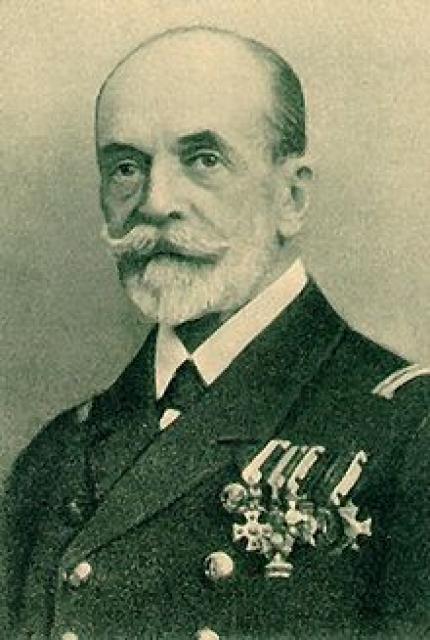
Anton Haus
 Hungary
Biography of Anton Haus
Anton Haus, born on June 13, 1851, in Tolmein, was an Austro-Hungarian Grand Admiral (1916). He began his service in the Navy in 1869 and later became a professor at the Naval Academy in Fiume. Haus was known for his expertise in technical matters related to the Navy and authored several works on the subject.
In 1900, he commanded a corvette and participated in operations in China during the Boxer Rebellion. In 1907, Haus was promoted to Vice Admiral and represented Austria-Hungary as a delegate at the Second Hague Peace Conference in 1907.
In 1912, he was appointed as the fleet inspector and on February 22, 1913, Haus replaced Admiral Montecuccoli as the Chief of the Naval Inspection of the Ministry of War, effectively becoming the Minister of the Navy. Under his leadership, the entire Austro-Hungarian Navy came under his command, with bases in Pola, the main base, and Kotor. Haus also oversaw the river fleet on the Danube.
By the start of the war, Austria-Hungary had three dreadnoughts, nine battleships, nine cruisers, 19 destroyers, and six submarines in the Mediterranean. The British and French fleets made efforts to engage the Austro-Hungarian fleet, but Haus managed to avoid confrontation with superior enemy forces.
In December 20, an Austro-Hungarian submarine attacked and damaged one of the French battleships, "Jean Bart." After Italy entered the war, the situation in the Mediterranean became even more complicated. However, German submarines managed to break through and began sinking Allied merchant ships. The Austro-Hungarian fleet did not provide significant resistance during the evacuation of the Serbian army to the island of Corfu in 1915.
In 1916, the new battleship "Szent István" joined the fleet. The Austro-Hungarian and German submarines in the Mediterranean sank approximately 300 merchant ships (total displacement of 800,000 tons) and 20 warships, including four battleships (the British "Russell" and "Cornwallis," the French "Suffren" and "Gaulois," and the French armored cruiser "Admiral Charner"). Haus opposed the German plan of unrestricted submarine warfare, which was highly successful in Germany.
In 1917, during the 11 months of submarine warfare, the Austro-German fleet sank 651 ships with a displacement of 1,647,000 tons in the Mediterranean, while losing four submarines (including one Austrian).


