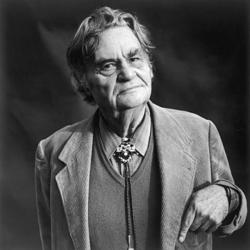
Antonina Klokovska
- Early Life and Education
- Research Interests and Contributions
- Historical Studies
- Return to Sociology and Theoretical Foundations
- Mass Culture and the Sociology of Culture
- Autonomy of the Sociology of Culture
- Membership and Editorial Roles
- Her editorial contributions included担任“文化与社会”和“社会学评论”的编辑。
Early Life and Education
Antoniina Kłoskowska was born in 1929 in Łódź, Poland. Her intellectual development began during World War II, initially through clandestine courses and later through intensive self-study. In 1945-48, she enrolled in the Department of Humanities at the University of Łódź to pursue sociology.
Under the tutelage of renowned sociologists Józef Chałasiński and Stanisław Ossowski, Kłoskowska excelled as a student. Łódź at that time boasted a vibrant sociological community, including Maria Ossowska, Józef Obremski, Nina Assorodobraj, and Jan Szczepański, who shaped Kłoskowska's intellectual trajectory.
Research Interests and Contributions
Cultural SociologyKłoskowska's primary research interest lay in the sociological study of culture. Her earliest work explored the socio-cultural formation of the individual and the internalization of culture. Her doctoral dissertation, "The Problem of the Personality of Primitive Man in Contemporary American Ethnosociology," earned her a doctorate in 1950.
She continued her research on personality types in anthropology, national character, and the American "personality and culture" school. Her collaborations with UNESCO and the Group for the Applied Social Psychology expanded her international research network.
Historical Studies
Political restrictions in Poland from 1950-56 forced Kłoskowska and her colleagues to shift their focus from sociology to the history of culture and social thought. Her work on "Machiavelli as a Humanist against the Background of the Italian Renaissance" earned her a habilitation degree in 1954.
Return to Sociology and Theoretical Foundations
Following the political thaw of 1956, Kłoskowska received a Ford Foundation scholarship to study sociology of culture in Paris in 1958. The reinstatement of sociology as an academic discipline in Poland allowed her to resume empirical research and theoretical reflection.
Her analysis of the attempts to establish sociology as a nomothetic science highlighted the importance of cultural and historical variability in social phenomena. Kłoskowska's seminal work, "An Outline of the Development of Social Thought," explored the methodological implications of this thesis.
Mass Culture and the Sociology of Culture
Kłoskowska's research on modern mass culture was influential in shaping the understanding of the phenomenon in Poland. She analyzed the emergence and specific characteristics of mass culture in Western societies and Poland.
Her 1964 book, "Mass Culture: Critique and Defense," provided a comprehensive synthesis of her research in this area. It examined the process of democratization of culture and raised important questions about the evaluation and theoretical foundations of the sociology of culture.
Autonomy of the Sociology of Culture
Kłoskowska argued for the autonomy of the sociology of culture as a distinct sociological discipline. She proposed the concept of "culture in the narrow sense," or symbolic culture, as the field of study for the sociology of culture.
This definition allowed her to delineate the boundaries of the discipline, focus on the role of signs and communication in culture, and establish a clear research agenda with empirical relevance.
Membership and Editorial Roles
Kłoskowska was a full member of the Polish Academy of Sciences and a professor of sociology at the University of Łódź and the University of Warsaw. She also served as a professor at the Institute of Political Studies at the Polish Academy of Sciences.
Her editorial contributions included担任“文化与社会”和“社会学评论”的编辑。
Legacy and InfluenceAntoniina Kłoskowska was a pivotal figure in the development of sociology in post-war Poland. Her research on culture, mass culture, and the theoretical foundations of the sociology of culture left a lasting impact on the field.
Her contributions to international research and her role as an educator and mentor inspired generations of Polish sociologists. Kłoskowska's work continues to shape the understanding of culture and society today.