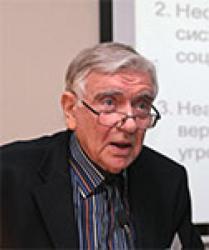
Manuel Castells
 USA
USA- Early Life and Activism
- Exile and Academic Journey
- Academic Career in Berkeley
- International Renown and Influence
- Influence of Marxism
- Landmark Work: The Information Age
- Personal Life
Early Life and Activism
Manuel Castells, a Spanish-American sociologist, was born into a Spanish family in Alicante, Spain. In 1958, he enrolled in the University of Barcelona. As a student, he became actively involved in the anti-Franco movement.
Exile and Academic Journey
In 1962, Castells fled to France due to political persecution. He pursued his education at the University of Paris under the guidance of Alain Touraine. He later taught sociology at the University of Paris West-Nanterre-la-Défense and the École des Hautes Études en Sciences Sociales.
Academic Career in Berkeley
In 1979, Castells joined the faculty of the University of California, Berkeley, where he became a professor of sociology. Concurrently, from 1988 to 1994, he served as director of the Institute of Sociology of New Technologies at the Autonomous University of Madrid.
International Renown and Influence
As a renowned sociologist, Castells has delivered guest lectures at prestigious universities worldwide. His work has been highly influential in urban sociology and the study of social change. He has received numerous accolades, including the Holberg Prize (2012) and the Balzan Prize (2013).
Influence of Marxism
Castells identified as a post-Marxist sociologist. While influenced by Marxism's comprehensive analysis of societal development, he rejected the notion of the working class as the primary force of change. He criticized communist regimes and the pursuit of utopias, arguing that they often lead to terror.
Landmark Work: The Information Age
In 1996-1998, Castells published a seminal three-volume monograph, "The Information Age: Economy, Society and Culture." This work synthesized his decades of research on the social, economic, and cultural transformations of the modern world.
Personal Life
In 1984, Castells met Russian sociologist Emma Kislyova at a conference in Novosibirsk, Russia. They married in 1993. In 1992, Castells served as the head of a group of foreign experts invited by the Russian government, but their recommendations were ultimately rejected.