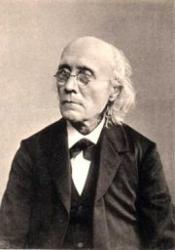
Antony Flew
 Great Britain
Biography of Antony Flew
Antony Flew was a British professor and rationalist philosopher with a global reputation, known for being the most outspoken atheist in the world for a long time. He taught at universities such as Oxford, Aberdeen, Kiel, Reading, and the University of York in Toronto.
Born on February 11, 1923, in London, Antony Flew studied at St Faith's School in Cambridge and then at Kingswood School in the resort town of Bath. Despite his father being a Methodist minister who insisted on a religious upbringing, Flew became a convinced atheist at the age of 15. During World War II, Flew studied the Japanese language at the School of Oriental and African Studies, University of London, and served as an intelligence officer in the Royal Air Force. After spending some time in the topographical department of the British Admiralty, Flew was stationed at Bletchley Park in June 1944, where one of the codebreaking centers was located, working on breaking the famous German "Enigma" cipher.
After the war, Antony Flew became interested in philosophy and graduated with distinction from St John's College, Oxford, in 1948, receiving the John Locke scholarship. He became a postgraduate student under Professor Gilbert Ryle, one of the founders of linguistic philosophy, and developed a strong interest in this field. For a year, Flew gave lectures at Christ Church College, Oxford, and then taught at Aberdeen for four years before serving as a professor of philosophy at the University of Kiel for twenty years. From 1973 to 1983, Professor Flew taught at the University of Reading. It was during this time that he developed one of his most famous arguments, the "No True Scotsman" fallacy, in his book "Thinking About Thinking" published in 1975. After retiring, Professor Flew taught part-time at the University of York in Toronto for several years.
In addition to his academic work, Flew was a vice-president of the British Rationalist Press Association, which defends the right to freedom of conscience and upholds the principles of rationalism. He was also chairman of the Voluntary Euthanasia Society and a member of the International Academy of Humanism. Besides his regular academic activities, Professor Flew gave lectures by invitation at universities around the world.
For most of his life, Antony Flew was a staunch supporter of atheism, denying blind faith and asserting that until scientifically confirmed evidence of God's existence emerged, atheistic views should be maintained. He also criticized the idea of life after death, the freedom to choose between good and evil, and the significance of the concept of God itself. However, he dramatically changed his views after attending a conference held in May 2003 at the Institute for Metascientific Research in Texas, and even co-authored a book with writer Roy Abraham Varghese titled "There Is a God: How the World's Most Notorious Atheist Changed His Mind." The book immediately became a subject of controversy, and an article in The New York Times claiming that Varghese was the primary author only added fuel to the fire. In 2004, a video of Professor Flew's presentation, based on the conference materials, caused a sensation in the scientific community. In it, he stated that recent research in biology, particularly DNA studies, proved that the involvement of a higher intelligence was a necessary condition for evolution. However, despite the most outspoken atheist of modern times acknowledging the failure of the atheistic theory of biological evolution, he did not become a Christian, as in Professor Flew's opinion, God has nothing to do with the religious beliefs of Christians or Muslims about Him.
Antony Flew married Annis Harti on June 28, 1952, and they had two daughters. He passed away on April 8, 2010, at the age of 87.