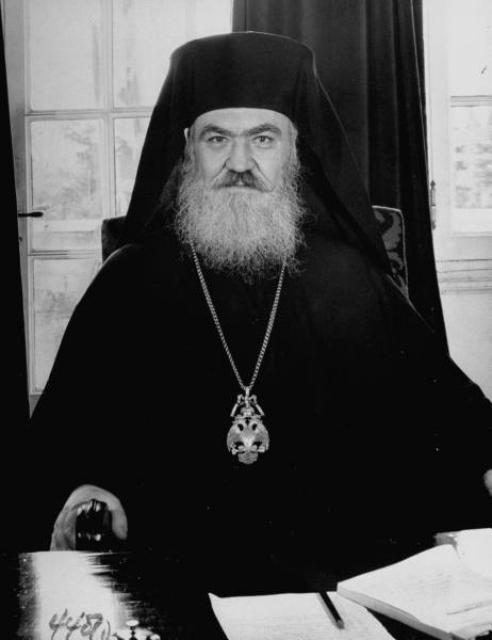
Archbishop Damaskinos
 Greece
- Early Life and Education
- Ecclesiastical Career
- Opposition to the Metaxas Regime
- Archbishop of Athens and All Greece
- Regent of Greece
- Death
Early Life and Education
Damaskinos Papandreou was born on March 3, 1891, in Dorvitza, Greece. He entered the monastery in 1917, where he was tonsured as a monk and ordained to the priesthood.
Ecclesiastical Career
In 1918, Damaskinos was appointed abbot of Pendeli Monastery. In 1922, he was consecrated as Bishop of Corinth. In 1938, he was elected Archbishop of Athens and Primate of the Hellenic Orthodox Church.
Opposition to the Metaxas Regime
Damaskinos openly opposed the dictatorship of Ioannis Metaxas. Consequently, his election as archbishop was declared invalid, and Bishop Konstantinos of Trapezounda was tasked with leading the Greek Church. Damaskinos then left Greece and settled in a mountain monastery in Phaneromeni.
Archbishop of Athens and All Greece
In 1941, following the German occupation of Greece, Damaskinos became Archbishop of Athens and All Greece. He emerged as a spiritual leader of the resistance movement and played a pivotal role in saving Jews by sending letters of protest to the authorities. Despite threats of execution, he published one such letter, condemning the persecution of Jews.
Regent of Greece
From 1945 to 1946, Damaskinos served as regent of Greece until the return of the monarch from exile. To maintain control over the situation, he appointed himself Prime Minister as well.
Death
Damaskinos Papandreou passed away in Athens on May 20, 1949, leaving behind a legacy as a revered religious leader and a staunch advocate for human rights.