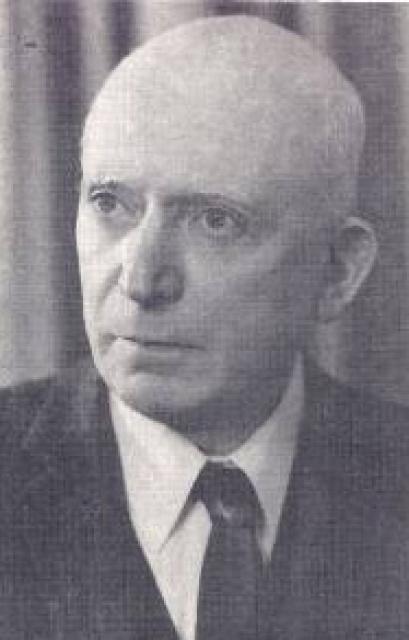
Arn Tseytlin
 Israel
- Aaron Zeitlin: A Literary Giant of the 20th Century
- A Journey of Exile and Inspiration
- A Prolific Dramatist
- Artistic Revolution: "Ideoplastischer Theater"
- Political Satire and the Shadow of the Holocaust
- Escape and Loss
- A Leading Figure in American Jewish Culture
- Poetic and Mystical Explorations
Aaron Zeitlin: A Literary Giant of the 20th Century
Early Life and Literary BeginningsAaron Zeitlin was born into a literary family in Gomel, Belarus, in 1898. He spent his childhood in Vilnius and Warsaw, where he began his literary career writing for Hebrew periodicals. His first published work, the poem "Matronita," appeared in 1914.
A Journey of Exile and Inspiration
In 1920, Zeitlin and his brother Elkhonon attempted to immigrate to Palestine. During their nine-month stay in the settlement of Zikhron Yaakov, Zeitlin befriended and corresponded with the renowned poet J.H. Brenner. Upon returning to Warsaw in 1922, he published his first poetry collection, "Shotns afn Shney" (Shadows on the Snow), in Yiddish.
A Prolific Dramatist
In the late 1920s, Zeitlin emerged as a popular playwright. His play "Brenner" (1927) chronicled the tragic fate of the titular poet, who was killed during the 1929 Arab riots in Jaffa. In "Yankev Frank" (1929), Zeitlin explored the clash between the anti-establishment figure Jacob Frank and the influential rabbi Israel Baal Shem Tov.
Artistic Revolution: "Ideoplastischer Theater"
Zeitlin's artistic influence extended beyond writing. In 1935, he co-founded the avant-garde art magazine "Globus" with Isaac Bashevis Singer. Zeitlin developed the concept of "Ideoplastic Theater," inspired by Vsevolod Meyerhold's "Theater of Masks" and the Moscow Yiddish Proletarian Theater ARTEF.
Political Satire and the Shadow of the Holocaust
In his satirical anti-utopia "The Yiddish State, or Weizmann the Second" (1934), Zeitlin critiqued the Zionist movement and the social injustices within Jewish society. The play eerily foreshadowed the Holocaust and the subsequent problems facing the Israeli state.
Escape and Loss
On the eve of World War II, Zeitlin emigrated to the United States. His entire family perished in the Holocaust. The horrors of the genocide haunted Zeitlin, who returned to the subject in his poem "Between Fire and Salvation" (1957).
A Leading Figure in American Jewish Culture
In the United States, Zeitlin worked as a journalist for the "Morgen Journal" and taught Jewish literature at the Jewish Theological Seminary. He wrote short stories, philosophical essays, poems, and popular works on parapsychology. His writings exerted a significant influence on Jewish cultural life in post-war America.
Poetic and Mystical Explorations
Zeitlin's poetry blended philosophical reflections with lyrical beauty. He delved into themes of Jewish mysticism and the influence of both European and Jewish literary traditions. He died in New York City in 1973 and was buried in Jerusalem.


