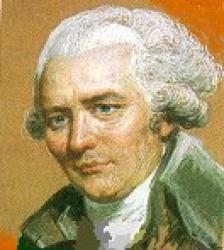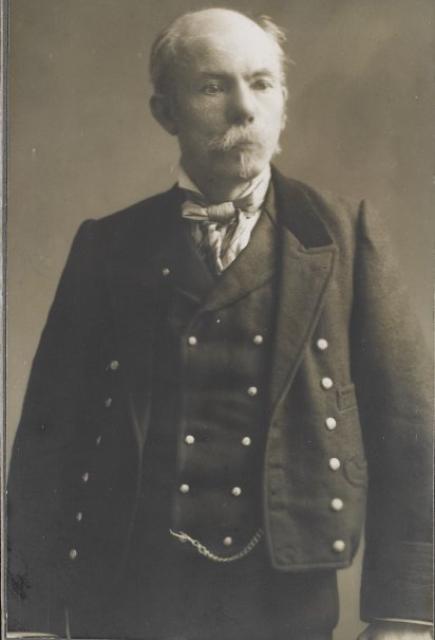
Arne Garborg
 Norway
Arne Garborg - Norwegian Writer and Supporter of the Second Norwegian Literary Language
Arne Harborg, born in 1851, is a Norwegian writer and a supporter of the second literary language in Norway. He comes from a peasant background and began his literary career as a journalist. In his youth, Garborg was a fervent pietist but later joined the "freethinkers" camp and published the liberal newspaper "Faedreheimen" (Homeland).
Advocate of Pure Norwegian Literary Language
Garborg was a strong advocate of a purely Norwegian literary language based on the dialects of the people. He wrote all his works in Norwegian. His first novel, "Fritenkjar" (Freethinker, 1881), did not distinguish itself with great artistic merits. However, his most famous work from this period is the novel "Bondestudentar" (Peasant Students, 1883), which is a biography of a peasant boy who becomes a student and desperately tries to transform himself into a city dweller. The city entices him with its easy life and instills in him a disgust for work, which he cannot overcome even while enduring hunger. For this rural boy, assimilation into the city means not accepting urban culture, but acquiring the outer gloss and material prosperity of a petty bourgeoisie. The more he becomes a city dweller in this sense, the lower he morally descends. Garborg's characters are typical of a part of the Norwegian intelligentsia. Coming from peasant backgrounds, they were thrown into the city during the process of capitalist stratification of the village but failed to establish strong roots in the new environment and became declassed. This is why his characters long for the countryside and despise the city, dreaming of solid domestic and religious foundations. Gramm from the novel "Traette Maend" (Tired People) is one such character, in which Garborg analyzes the mental state of an intellectual-peasant. Disillusioned with science and politics, Gramm seeks support in an imaginary "aristocracy of the future" and finds it in religious faith. Another one of his characters, from the story "Lost Father," finds salvation in returning from the city to the fields and meadows, from atheism to ancestral religion. In his old age, the writer himself returned to religion, became interested in theosophy and spiritualism. His novels "World," "Teacher Gave," and especially "I Heheim" are permeated with religious sentiment and spiritual quest. In addition to the aforementioned works, Garborg wrote a number of stories, with the most successful ones being tales from the lives of peasants, as well as several novels. His most famous novels, such as "Peasant Students," "Tired People," and others, demonstrate Garborg as a restrained naturalist.
P.S. 1. The main character of the novel "Tired People" is named Gabriel Gram (written with one "m").
2. The correct mention should be: "His novels 'World,' 'Teacher Gave,' and especially 'I Helheim.'" "Teacher Gave" is the correct title of this work, and it is actually a play.
"I Helheim" ("In the Kingdom of Death," 1901) is a poetic work, a poem by genre. It is a continuation of the poem "Haugtussa" ("The Mountain Maid," 1895) - Garborg's most famous poetic work.
3. "Ungdom" ("Youth") is also not a novel but a novella.
4. The novel "Mannfolk" ("Men") was written in 1886.
5. Regarding the phrase: "In his best novels - 'Peasant Students,' 'Tired People,' and others - Garborg is a restrained naturalist" - I would like to clarify that Garborg is a naturalist in the early period of his career, but starting with the novel "Tired People," he leans towards new artistic forms, including symbolism.
By the way, Garborg's novel "World" has just been released in Russian in my translation.
I wish you good luck and thank you for your attention.
Sincerely,
Alexey Selnitsin