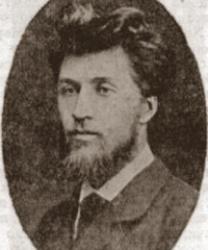
Arsen Kotsoev
- Arsen Kotsoyev
- Literary Beginnings and Advocacy
- The Flourishing of Ossetian Literature
- Collaborative Efforts and Recognition
- Post-Revolutionary Career and Legacy
- Literary Themes and Style
- Major Works
- Influence and Legacy
Arsen Kotsoyev
Early Life and InspirationBorn into a humble peasant family in 1872, Arsen Kotsoyev's journey to becoming a revered literary figure began at the tender age of nine when he enrolled in a local school. His enthusiasm for literature ignited during his seminary studies, culminating in a memorable pilgrimage to meet the celebrated poet and educator Kosta Hetagurov.
Literary Beginnings and Advocacy
Unable to complete his seminary education due to illness, Kotsoyev embarked on his literary endeavors by submitting stories to various newspapers under pseudonyms. His writings explored the plight of Ossetian peasants, critiqued superstitious beliefs, and advocated for social justice. His outspokenness led to his dismissal from teaching positions and forced him to relocate to Southern Ossetia.
The Flourishing of Ossetian Literature
In 1910, Kotsoyev established the weekly journal "Afsir" (The Ear) in Tiflis, providing a platform for the publication of Ossetian literature and publicistic works. Despite its closure after 14 issues, the journal had a profound impact on the development of Ossetian literary discourse.
Collaborative Efforts and Recognition
During the early 20th century, Kotsoyev worked as a proofreader for the Bolshevik newspaper "Pravda" and contributed stories to various St. Petersburg periodicals. His literary prowess was recognized with the Order of the Badge of Honor in 1939.
Post-Revolutionary Career and Legacy
In the post-revolutionary period, Kotsoyev played a significant role in the establishment of the new Ossetian press. He returned to Vladikavkaz in 1929 and continued to write prolifically. Despite his literary accomplishments, he faced suspicion from the new regime.
Literary Themes and Style
Kotsoyev's writing often depicted the tragic experiences of Ossetian mountaineers, including depictions of blood feuds, poverty, and the struggle against superstition. His nuanced portrayals of complex characters and his mastery of the Ossetian language earned him high praise from fellow writers and critics.
Major Works
"Saumaraisom" (Early in the Morning): Explores the cycle of blood feuds and the devastating impact on families.
"Fynddas azy" (Fifteen Years): A tale of patience and calculated revenge that results in a tragic outcome.
"Djanaspi" (1940): A novel that chronicles the class struggles within an Ossetian village during the tumultuous pre-revolutionary and collectivization periods.
Influence and Legacy
Kotsoyev's literary legacy left an enduring mark on Ossetian literature and played a pivotal role in shaping its identity. His works continue to be read and studied today, testament to his enduring brilliance as a writer. Streets in Vladikavkaz and Beslan bear his name, and a monument stands in his honor outside the National Scientific Library of North Ossetia-Alania.