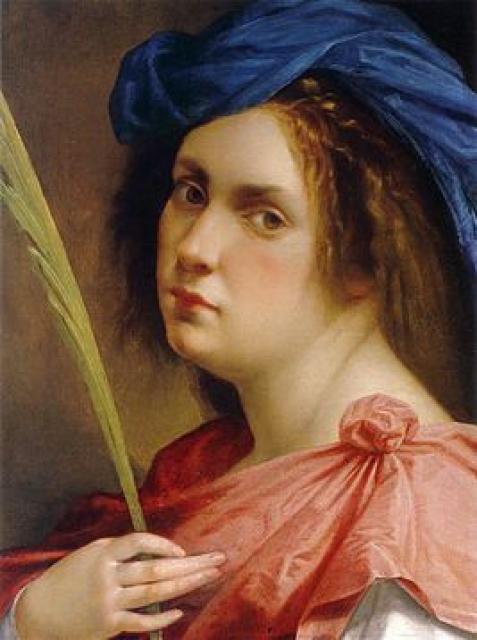
Artemisia Gentileschi
 Italy
Italy- Artemisia Gentileschi: Trailblazing Baroque Painter
- Artistic Expression and Patronage
- Marriage and Travels
- First Female Academician
- Legacy and Cultural Impact
Artemisia Gentileschi: Trailblazing Baroque Painter
Early Life and TraumaBorn to painter Orazio Gentileschi, Artemisia endured a traumatic childhood when her mother passed away at a young age. In 1612, she was sexually assaulted by Agostino Tassi, an artist working alongside her father. Despite a humiliating and arduous seven-month trial, Tassi was found guilty and sentenced to a year in prison.
Artistic Expression and Patronage
Arrigo's ordeal profoundly influenced her art. Her renowned painting "Judith Beheading Holofernes" (1612-1613) vividly depicts her own experiences. She explored themes of female empowerment and resilience, often portraying biblical heroines like Lucretia, Cleopatra, and the Queen of Sheba.
Marriage and Travels
Married to fellow artist Pierantonio Stiattesi, Artemisia relocated to Florence in 1612. Under the patronage of Cosimo II de' Medici, she gained recognition and befriended renowned thinkers like Galileo Galilei. Her artistic journey spanned Italy, including stops in Genoa, Venice, Rome, and Naples.
First Female Academician
In a groundbreaking achievement, Artemisia became the first woman elected to the Accademia di Arte del Disegno in Florence, the first art academy in Europe. Her bold and evocative paintings earned her critical acclaim.
Legacy and Cultural Impact
Artemisia's life and work have inspired numerous literary and cinematic adaptations. Italian author Anna Banti's novel, "Artemisia," portrayed her as a diarist, while Wendy Wasserstein's play "Heidy Chronicles" and Sally Clark's "Life Without Instructions" dramatized her experiences. Agnès Merlet's 1997 film "Artemisia" and Susan Vreeland's 2002 novel "The Passion of Artemisia" further showcased her significance.