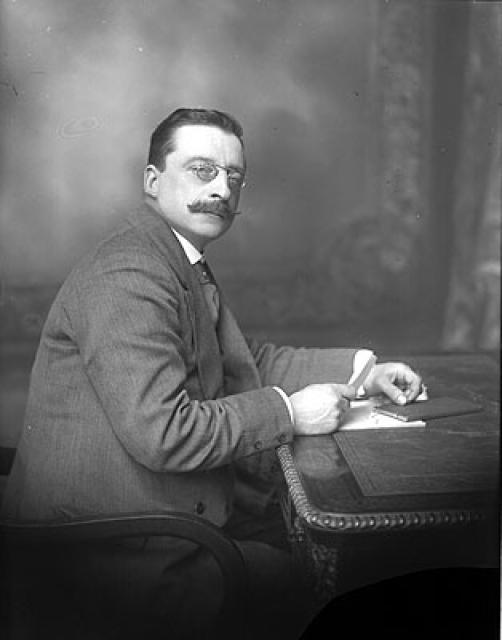
Arthur Griffith
 Ireland
- Biography of Arthur Griffith
- Founding of Sinn Féin
- Leader of the Irish Rebellion
- The Anglo-Irish Treaty and Civil War
- President of the Irish Free State
Biography of Arthur Griffith
Arthur Griffith was an Irish journalist, revolutionary, and political figure. He was born in Dublin, Ireland, in 1871. Griffith played a crucial role in the fight for Irish independence and was known as the creator and third leader of the Sinn Féin party.
Founding of Sinn Féin
In 1905, Griffith co-founded the organization Sinn Féin and served as its chairman. Sinn Féin was established with the goal of achieving Irish independence through political means. Griffith was a staunch advocate for self-governance and believed in the establishment of an independent Irish republic.
Leader of the Irish Rebellion
In 1919, Griffith led the rebellion against British rule in Ireland. He was one of the key founders of the Irish parliamentary assembly in the same year and became the vice-president of the newly formed republic. Griffith played a pivotal role in negotiating the Anglo-Irish Treaty of 1921 as the head of the Irish delegation.
The Anglo-Irish Treaty and Civil War
Griffith reluctantly agreed to the terms of the Anglo-Irish Treaty, which resulted in the partition of Ireland and the creation of the Irish Free State as a dominion within the British Empire. However, his decision was met with opposition from radical factions within the Irish Republican Army (IRA), leading to the Irish Civil War.
President of the Irish Free State
In 1922, Griffith was elected as the first President of the Irish Free State. However, his presidency was short-lived as he passed away from a heart attack a few months later, in August 1922. Despite his brief tenure, Griffith left a lasting impact on Irish politics and played a crucial role in the establishment of the Irish Free State.
Arthur Griffith's contributions to Irish independence and his role as a political leader have solidified his place in Irish history. His commitment to the cause of self-governance and his leadership during turbulent times continue to be remembered and celebrated in Ireland.


