Arthur Keith
 Great Britain
- Biography of Arthur Keith
- Research on Cultural Differences
- Early Life and Education
- Contributions to Anatomy and Anthropology
- Views on the Industrial Revolution
- Later Life and Legacy
Biography of Arthur Keith
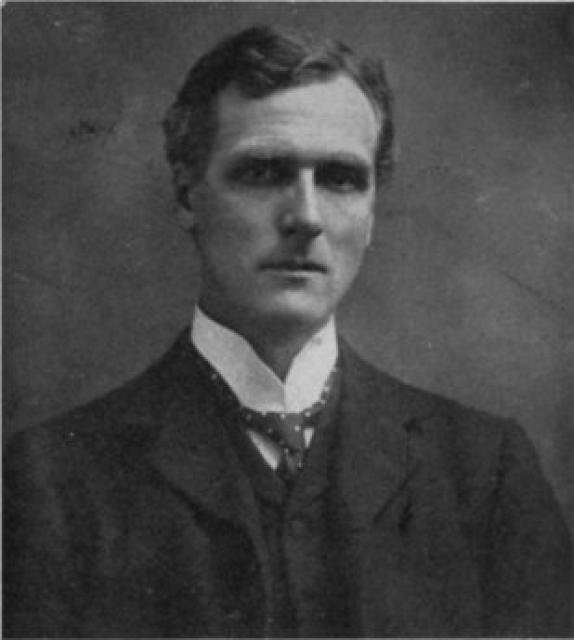
Arthur Keith was a Scottish anatomist and anthropologist who was a member of the Royal College of Surgeons of England (RCSE). He was a leading specialist in the study of human fossils and was elected president of the Royal Anthropological Institute (RAI). In this role, he became deeply interested in the topic of human evolution, which led to the publication of his book 'A New Theory of Human Evolution', supporting the idea of group selection.
Research on Cultural Differences
Keith proposed the idea of cultural differences as a mental barrier, emphasizing concepts such as 'in-group' and 'out-group'. He believed that humans developed in accordance with their inclination to live in small competing communities. After World War II, he focused on the racial origins of anti-Semitism and dedicated a whole chapter to anti-Semitism and Zionism in his book 'A New Theory of Human Evolution'. In it, he claimed that Jews lived by a 'dual code', displaying friendliness towards their own group and hostility towards others.
Early Life and Education
Sir Arthur Keith was born on February 5, 1866, in Aberdeenshire, Scotland, to a humble farmer. He obtained a Bachelor of Medicine degree from the University of Aberdeen in 1888. From 1892, Keith studied anatomy at University College London and the University of Aberdeen. In 1893, he received an award for demonstrating ligaments in the human body and primate organisms.
Contributions to Anatomy and Anthropology
Keith's research focused on the study of primate skulls, leading to the publication of his work 'An Introduction to the Study of Anthropoid Apes' in 1897. He also authored other notable works such as 'Human Embryology and Morphology' and 'Concerning Man's Origins'. Keith served as the editor of the 'Journal of Anatomy' from 1915 to 1936 and was the president of the Anatomical Society of Great Britain and Ireland from 1918 to 1920. He was elected a fellow of the Royal Society in 1913 and was knighted in 1921.
Views on the Industrial Revolution
In his book 'Concerning Man's Origins', Keith discussed the role of capital in evolution. He proposed an interesting explanation for Britain's leading role in the development of industrial society. According to Keith, the cold and unfriendly climate in Britain forced settlers to think and experiment more, leading to the industrial revolution. He argued that the revolution was centered in the cold northern counties of England, such as Lancashire and Yorkshire, where high-tech developments of the time involved spinning and weaving.
Later Life and Legacy
In September 1931, Keith was invited by 'The New York Times' to make predictions about the future of humanity in 2011. Keith focused on the field of medicine and expressed concern about the increasing specialization of doctors, which he believed would lead to further 'divisions' not only in medicine but in other fields as well. In 1932, he helped establish the Downe Research Institute in Kent, where he worked until his death on January 7, 1955. Keith also gained recognition for his discovery of the sinus node, a part of the heart's conducting system, in 1907.