Arthur Ung
 Great Britain
Arthur Young: An English Writer and Agriculturalist
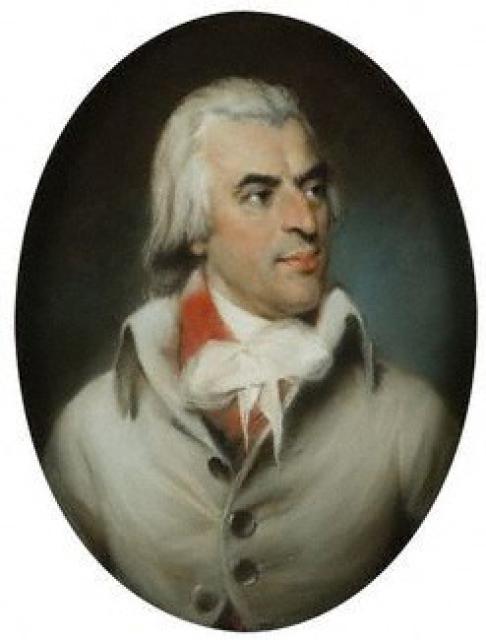
Arthur Young (1741-1820) was a renowned English writer and agriculturalist. Initially, his father wanted him to become a merchant, but after his father's death, Young convinced his mother to allow him to manage her farm in Suffolk County. It was here that he began implementing various agricultural improvements that had long interested him. Although his early attempts were unsuccessful, Young persevered and published the results of his experiments. To gain a better understanding of his work, he traveled extensively throughout England and Ireland, and later embarked on a grand tour of France, Spain, and Italy.
In 1793, Young was appointed as secretary of the newly established Board of Agriculture by Prime Minister Pitt. By this time, he had already gained significant fame in both England and Europe, with his writings being translated into several European languages. Young began writing at a young age and published more than thirty works, some of the most important being:
- "Letters to the Landlords of Great Britain" (1767)
- "Six Weeks Tour Through the Southern Counties of England and Wales" (1768)
- "A Course of Experimental Agriculture" (1770)
- "Farmer's Calendar" (1770)
- "Guide in Hiring and Stocking Farms" (1770)
- "A Six Months Tour Through the North of England" (1770)
- "The Farmer's Tour Through the East of England" (1770)
- "Rural Economy" (1772)
- "A Tour in Ireland with General Observations on the State of that Kingdom" (1780)
- "The Question of Wool Established" (1787)
- "Travels During the Years 1787-88 and 9 Undertaken More Particularly with a View of Ascertaining the Cultivation Wealth, Resources, and National Prosperity of France" (1792)
- "An Idea of the Present State of France" (1795)
- "Essay on the Manures" (1804)
- "On the Husbandry of the Three Celebrated Farmers" (1811)
- "Inquiry into the Rise of Prices in Europe" (1815)
Young also edited the "Annals of Agriculture" (1784-1804), a 45-volume collection. In addition to their significance in agronomy, Young's writings are of paramount importance for the history of the late 18th century. As there is a lack of precise statistical data for the 18th century, historians of the economic life of England and France during this period rely primarily on Young's observations and data. His "Travels Through France" hold particular importance as Young was in France from 1787 to 1790, providing insight into the country's situation on the eve of the revolution and in its early stages. Alexis de Tocqueville was the first to extensively use Young's work for the history of the French Revolution.