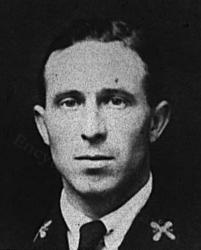
Arvid Jarnefelt
 Finland
- Biography of Arvid Jarnefelt
- Education and Early Career
- Influence of Leo Tolstoy
- Literary Works
- Later Years and Legacy
Biography of Arvid Jarnefelt
Arvid Jarnefelt was a Finnish writer and novelist, born on November 16, 1861, in Pulkovo, which is now within the borders of Saint Petersburg. He was the son of General August Alexander Jarnefelt and his wife Elizaveta Konstantinovna, nee Klodt von Jurgensburg, who was the niece of sculptor Peter Clodt. Among his eight siblings were composer and conductor Edward Armas Jarnefelt, artist Eero Jarnefelt, and Aino Sibelius, the wife of Jean Sibelius.

Education and Early Career
Jarnefelt graduated from the University of Helsinki and later became a scholarship holder at Moscow University from 1886 to 1888, where he received a solid legal education. During this time, he wrote his "Letters from Russia" in Finnish newspapers, sharing his impressions of Russian life, which helped him better understand the Russian literature he always admired. The final letter, written in 1887 to commemorate the fiftieth anniversary of the death of A.S. Pushkin, was dedicated to Russian literature.
Influence of Leo Tolstoy
Jarnefelt was deeply inspired by the ideas of Leo Tolstoy, whose influence played a significant role in his work. He became one of the first translators of Tolstoy's works into Finnish and corresponded with him for many years. In 1895, Jarnefelt resigned from his position at the district court, purchased land near the town of Lohtaja, and established a peasant farm where he taught the locals to read and write.
Literary Works
In 1894, Jarnefelt published his autobiographical book, "My Awakening," in Helsinki. His first novel, "The Fatherland" (1893), showcased the artist's desire to explore Finnish life. The awareness of social issues permeates his novels, including "The Brothers" (1900), "Elena" (1902), "Children of Mother Earth" (1905), "The Inhabitants of Venehoya" (1909), as well as his play "Samuel Kroel" (1907) and other works. These works demonstrated the critical nature of his writing while also reflecting his commitment to the ideas of non-resistance and self-improvement.
Later Years and Legacy
In the 1910s, Jarnefelt wrote a series of plays with a clear religious and moralistic tendency and published a novel called "The Happy Ones" (1916) under a pseudonym, which followed the same theme. During this period, he lived and worked in Europe, particularly in Paris. Towards the end of his life, Jarnefelt published three volumes of memoirs titled "The Novel of My Parents" (1928-1930). These memoirs provided a glimpse into his personal life and family history.
Overall, Arvid Jarnefelt was a Finnish writer who made significant contributions to Finnish literature. His works reflected a critical perspective on society while emphasizing the ideas of non-resistance and self-improvement. Through his writings and translations, Jarnefelt played a crucial role in introducing Russian literature, particularly the works of Leo Tolstoy, to the Finnish audience.