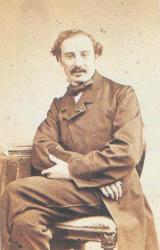
Harry Martinson
 Sweden
Biography of Harry Martinson
Early Life and CareerHarry Edmund Martinson was a Swedish writer and Nobel laureate in Literature in 1974. He was born in Ytterjärna, in the province of Blekinge in southern Sweden. His father, Martin Olofsson, was a long-haul captain who died when Harry was only 6 years old. Soon after, his mother abandoned Harry and his six sisters and immigrated to America, leaving the children in an orphanage, one of the poorest in the area. Martinson spent his childhood in various foster homes, from which he often ran away.
At the end of World War I, still a teenager, Harry went to Gothenburg and became a cabin boy on a ship. From 1920 to 1927, he worked as a stoker and sailor, serving on 14 different ships. He often ran away from the ships in ports in India, China, and South America, where he worked as a dock worker or simply wandered. Eventually, tuberculosis forced him to give up his wandering life. Parting with the sea, Martinson began to write poetry.
In 1929, Martinson married the writer Moa Schwartz, who was 14 years older than him. In the same year, he published his first poetry collection, "Ghost Ship" ("Spokskepp"), inspired by Kipling and the Swedish critic and modernist poet Arthur Lundkvist. Martinson's early poems, included in the anthology "Five Young" ("Fem Unga"), were influenced by Kipling, Walt Whitman, Carl Sandburg, and Edgar Lee Masters, but critics considered them more independent than his earlier works.
Literary Career and Recognition
After the release of the collection "Nomad" ("Nomad", 1931), which contained his first mature lyrical poems written in free verse, Martinson gained a reputation as a promising poet. Although purists criticized the unconventional poetic language and syntax of "Nomad", many critics were impressed by their freshness and rich imagery. American poet and critic Alrik Gustafsson explained the complexity and experimental nature of Martinson's poetry as the "inability of the familiar language to express the power and ambiguity of the poet's impressions."
In the late 1930s, Martinson released three volumes of articles on nature, contrasting the natural, innocent world with the harshness of the industrial age. In 1934, Martinson traveled to the Soviet Union with his wife and participated in the work of the First Congress of Soviet Writers. His impressions of Russia were not very positive. When the Soviet-Finnish War broke out in 1939, he enlisted in the Swedish Volunteer Corps but was soon demobilized due to health reasons. During his recovery, Martinson wrote the essay "Truth Against Death" ("Verklighet till dods", 1940), which called for the fight against totalitarianism in Europe. In the same year, he divorced his wife.
During World War II and the preceding years, Martinson suffered from depression, but his poems in the collection "Trade Wind" ("Passad", 1945) were filled with a calm concentration. Like his earlier works, "Trade Wind" spoke of travels and journeys, but this time they were spiritual. The trade wind, as Martinson explained, symbolized the human mind and the individual's desire for free expression.
One of Martinson's most significant works after the war was the novel "The Road to Klockrike" ("Vagen till Klockrike", 1948), and the epic poem "Aniara: A Revue about Man in Time and Space" ("Aniara: En revy om manniskan i tid och rum", 1956). The novel depicted the adventures of an elderly tramp named Bolle, who travels through Sweden. Despite its compositional flaws, this novel, written in the spirit of folk legend, was well received in English-speaking countries, and Martinson was elected a member of the Swedish Academy, a tremendous honor for a self-taught writer.
"Aniara" is a philosophical poem consisting of 103 songs about a spaceship carrying 8,000 refugees escaping an atomic catastrophe on Earth. At the same time, the poem is a symbolic story of humanity losing its spiritual values. Martinson did not fear technological progress, but progress for the sake of progress seemed to him like an endless journey into darkness. Some critics considered this poem convoluted and pretentious, while others, including American critic Leif Sjoberg and poet Robert Bly, called "Aniara" Martinson's masterpiece, despite the inadequate English translation of the poem. Martinson himself referred to the English translation as "scandalous." There is also an opera based on the poem, composed by Karl-Birger Blomdahl. Christopher Howell, a critic, wrote that in his poetic works, Martinson "blurs the line between the mechanized world of humans and the harmony of nature." Indeed, the theme of alienation is present in his later poetic cycles such as "Cicada" ("Cikada", 1953), "Grass in Thule" ("Grasen i Thule", 1958), and "The Cart" ("Vagnen", 1960). The collection "The Cart" received mixed reviews, and Martinson decided to stop writing poems. However, in 1971, he published "Poems about Light and Darkness" ("Dikter om ljus och morker"), and in 1973, "On Tufts" ("Tuvor"). Among the several plays he wrote, the most significant is "Three Knives from Wei" ("Tre Knivar fran Wei", 1964).
In 1974, Martinson was awarded the Nobel Prize in Literature, which he shared with his fellow Swede Eyvind Johnson, "for writings that catch the dewdrop and reflect the cosmos." After the award, there were voices, especially in Sweden, accusing the Swedish Academy of favoritism. However, Martinson and Johnson were the first Swedish laureates since Per Lagerkvist in 1951. In his welcome speech, Carl Ragnar Gierow, a member of the Swedish Academy, stated that Martinson and Johnson represented "a multitude of writers who emerged from the working class, storming into literature to enrich it with their complex destinies." He also praised their "creative energy," which was not dependent on local interests and limited readerships. Summarizing Martinson's literary merits, Leif Sjoberg called him the "first poet of the cosmic era," and Christopher Howell noted that Martinson's poetic language "is characterized by precision and absolute precision." For a self-taught writer, Martinson possessed remarkable erudition. Martinson died in Stockholm in 1978 at the age of 73.
In addition to the Nobel Prize, Martinson was awarded an honorary doctorate from the University of Gothenburg in 1954, and in 1972, he received the international Henrich Steffens Prize.