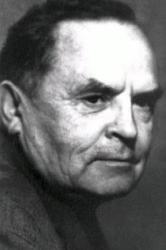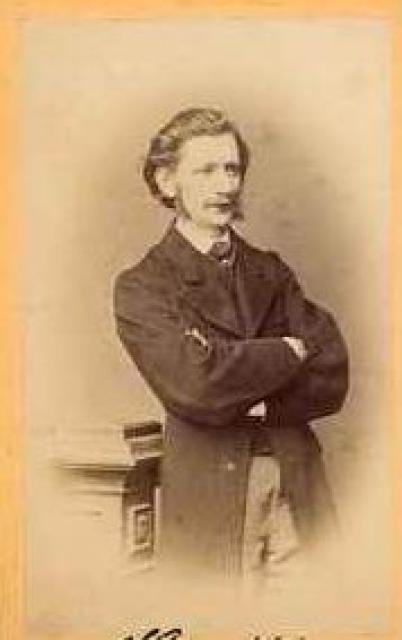
August Kundt
 Germany
- August Kundt
- Academic Career
- Military Service and Strasbourg University
- Distinguished Teaching and Research
- Notable Contributions
- Other Scientific Achievements
- Inner friction of gases
August Kundt
Early Life and EducationBorn in 1839 in Germany, August Kundt exhibited an early aptitude for physics. In 1860, he enrolled at Leipzig University but soon transferred to the University of Berlin, where he immersed himself in the newly established physics laboratory under the tutelage of renowned physicist Heinrich Gustav Magnus.
Academic Career
Despite the laboratory's humble beginnings, Kundt flourished as an experimentalist. In 1867, he became a private lecturer at the University of Berlin and was appointed professor at the Polytechnic Institute of Zurich the following year. In 1870, he moved to Würzburg University.
Military Service and Strasbourg University
Kundt's academic career was interrupted by the outbreak of war in 1870 when he joined the army. He was involved in the Siege of Strasbourg, where he witnessed the establishment of a German university two years later. Kundt was tasked with setting up the university's physics institute, which he accomplished with distinction.
Distinguished Teaching and Research
Kundt's reputation as a gifted lecturer and scientist attracted a multitude of young scholars from around the world. He was surrounded by students who revered him for his unwavering enthusiasm and warmth. In 1888, he returned to the University of Berlin as a professor of physics.
Notable Contributions
Kundt's scientific work stood out for its originality, ingenuity, and simplicity in experimental design. His pioneering research on the speed of sound in gases and solids (using Kundt's tubes) led to groundbreaking insights. He also investigated anomalous dispersion (using crossed prisms) and uncovered the piezoelectric effect.
Other Scientific Achievements
Kundt made significant contributions to various fields of physics, including:
Inner friction of gases
Thermal conductivityDouble refraction in rotating liquids
Kerr and Hall effects
Magnetic rotation of the plane of polarization in metals
Refractive indices of metals (using electrolytic prisms)
Legacy
August Kundt passed away in 1894 due to heart disease. His scientific breakthroughs and inspiring mentorship left an enduring mark on the field of physics. His exceptional skills as an experimenter and his groundbreaking research continue to be celebrated and applied in modern scientific endeavors.