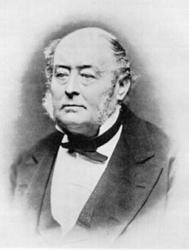
Augustin Cochin
 France
- Auguste Cochin: French Historian of the French Revolution
- Career and Research
- "La Révolution et la Libre Pensée"(1924)
- Theory of the Revolution
- Democracy and Terror
- Legacy
- Inspiration for Future Scholars
- Critique
Auguste Cochin: French Historian of the French Revolution
Early Life and EducationAuguste Cochin, a French historian, was born in Paris on 22 December 1876. His father, Denys Cochin, was a politician of the extreme right. Cochin earned his doctorate in French history in 1902, focusing on the 17th century.
Career and Research
In 1903, Cochin began researching the French Revolution. He died in battle at the Somme on 8 July 1916. His major works were published posthumously:
"La Société de Pensée et la Démocratie: Études d'Histoire Révolutionnaire"(1921; republished as "L'Esprit du Jacobinisme" in 1979)
"La Révolution et la Libre Pensée"(1924)
"Les Elections en Bretagne"(1925, a two-volume study of elections in Brittany)
Theory of the Revolution
Cochin believed the French Revolution stemmed from transformations in society's collective consciousness. He downplayed economic factors, acknowledging "real causes" like taxation issues but emphasizing their limited impact.
Instead, he argued that the "petite peuple" (intellectual elite, or "philosophes") organized into societies ignited the revolution. These societies, disconnected from society at large, imposed their ideas and values on the "grand peuple" (the masses).
Democracy and Terror
Cochin saw the revolution as a manifestation of "petit peuple" rule, a system he called "democracy." He believed that terror was an inevitable attribute of democracy.
Legacy
Cochin's theories went largely unnoticed until the late 1970s, when "revisionist" historians such as F. Furet recognized his influence. His work challenged traditional views of the French Revolution but also raised unanswered questions about the origins and influence of the "petite peuple."
Inspiration for Future Scholars
Cochin's ideas inspired later scholars, including Russian academician Igor Shafarevich. Shafarevich applied Cochin's theories to 20th-century Russian history, equating the "petite peuple" with Jewish nationalism.
Critique
Critics argue that Cochin's theory fails to adequately explain how the "petite peuple" gained influence and imposed its will on the masses. Nonetheless, his work remains influential in historiography, inspiring new perspectives on the French Revolution.