Alexey Penzensky
 Russia
- Biography of Alexey Penzensky
- The Scientific Value of Nostradamus' Works
- The Difficulty of Translation and Interpretation
- Misleading Translations of Nostradamus
Biography of Alexey Penzensky
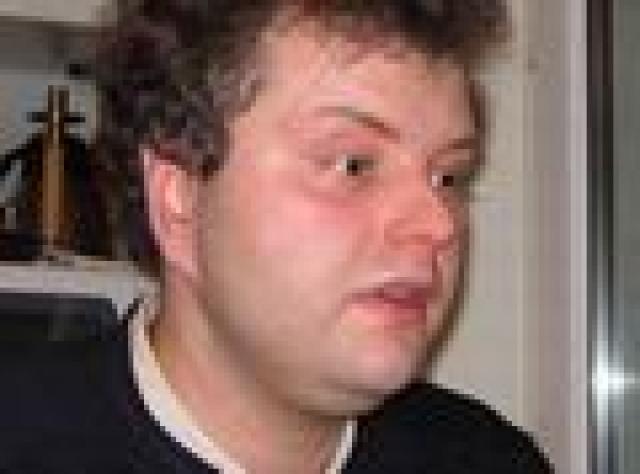
Alexey Penzensky is a candidate of historical sciences who has dedicated his research to the works of the famous historian Nostradamus. With the meticulousness of a scientist, Penzensky has delved into the study of Nostradamus' writings, even going as far as studying astrology and the life of France during the time of the predictor. According to Penzensky, Nostradamus did not actually make any predictions; he was simply another historian.
The Scientific Value of Nostradamus' Works
When asked about the scientific value of Nostradamus' works and whether anyone truly understood what he wrote, Penzensky replied that no one truly understood. Unlike his contemporaries such as Leonardo da Vinci, Giordano Bruno, Nicolaus Copernicus, and Tommaso Campanella, who also dabbled in astrology and mysticism, Nostradamus did not leave behind any rational ideas. He is only known in history as an author of prophecies, which are studied by enthusiasts of mysticism. These enthusiasts quickly realized the wide range of possibilities presented by Nostradamus' writings, allowing them to interpret them however they pleased. The first attempts to use his writings for political purposes date back to the late 16th century. In the 1990s, a television program even claimed that according to Nostradamus, Russia had a great future, reassuring its viewers not to worry or take to the streets in protest.
However, Penzensky emphasizes the difference between a scientific-historical approach, where the text is read as it would have been understood by contemporaries, and a reinterpretation of the era in which they were written, searching for names like Hitler, Franco, and others. According to Penzensky, Nostradamus' main message was that history repeats itself. He questions why people would recognize Napoleon in Nostradamus' quatrains describing the biography of Caesar or why the life of Suleiman the Magnificent aligns well with the biography of Alexander the Great. Various "researchers" often twist the facts to suit their own agendas, but who will fact-check? Furthermore, until recently, there was no adequate translation in Russian.
The Difficulty of Translation and Interpretation
Penzensky explains that one must consider the significant differences between the French language of that time and the modern language. For example, the verb "attendre," which means "to wait" in modern French, in the 16th-century French language meant "to stand at attention," "to observe someone with tension," or "to fear someone," "to observe with apprehension." In the context of translating the "Prophecies," this nuance is crucial. Thus, in the correct translation of quatrain 6 of century 2, it should read: "they will fear a terrible age" rather than "they will wait for a strange age." Translators are often perplexed, asking why they should wait when it is clear that it will happen anyway. Nostradamus did not engage in such nonsense. If one takes into account the language's peculiarities, there are hardly any anagrams, encrypted nicknames, or names. Nostradamus did not enjoy playing word games with his unfortunate readers. There are simply twisted names of settlements, often mentioning villages that cannot even be found on detailed maps. It is unclear! Commentators argue that these are encrypted names of future figures, but Nostradamus did not invent these names out of thin air. He had a substantial library for those times, including a guide to the roads of France with a list of the names of settlements. If one were to open this guide, they would find word-for-word all the settlements that Nostradamus described.
Misleading Translations of Nostradamus
When asked if the translations of Nostradamus that are widely sold mislead readers, Penzensky acknowledges that some translations are honest, to the extent possible. For example, the French translation by Claude Lebére is honest, although he did deceive readers with a mass of philological information. Another remarkable researcher is Pierre Brindamour, a Canadian historian of antiquity who noticed similarities between Nostradamus' prophecies and events he had read about before. Brindamour noticed that Nostradamus borrowed certain themes from ancient historians such as Tacitus, Suetonius, and Titus Livius. Another historian, Lemayur, spent a long time finding direct, word-for-word coincidences with Plutarch's writings. Penzensky himself found much from Herodotus.
Penzensky explains that publishers in Russia often choose the translation by John Hogue, who is not the best choice. They choose it because it is a cheap edition. In the US, the book costs $15. Hogue's translation is highly adapted for mass readership, which is why it sells. However, in the Russian edition, it becomes ridiculous; the French text is on the left, with serious typographical errors, and the Russian translation is based on the English translation. Penzensky can only imagine the frustration of the translator, realizing that neither the French nor the English corresponds to the Russian translation. This is because they are chopping up the original French text, taking a piece or quatrain and translating it. As a result, the translation becomes complete gibberish. Nevertheless, the charm of Nostradamus' texts does not disappear even after discovering that the references to "Hister" or "Hister" in three quatrains are not about Hitler but about the Danube River. French readers still enjoy Nostradamus because he captured their moods. In the 16th century, they believed that the "Golden Age" was ahead of them. Nostradamus contradicted this belief. After Machiavelli, he became the second person to express this idea in poetic form. Machiavelli's work became a scientific treatise, while Nostradamus' work became a mystical phantasmagoria. He simply wrote historical works in poetic form.