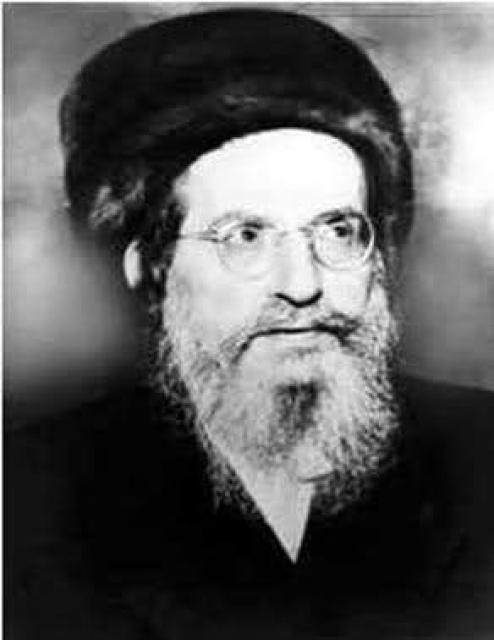
Baal Sulam
 Israel
- Rabbi Yehuda Leib Ashlag: A Master of Kabbalah
- Early Years and Education
- Influences and Teachings
- Literary Contributions
- Collaboration and Group Study
- Legacy and Impact
Rabbi Yehuda Leib Ashlag: A Master of Kabbalah
Rabbi Yehuda Leib Alevi Ashlag, known as Baal HaSulam, was a prominent Kabbalist and author whose writings have had a profound impact on the study of Kabbalah. Born on October 4, 1886, in Warsaw, Poland, Baal HaSulam emerged as a leading figure in the dissemination and interpretation of Kabbalistic teachings.
Early Years and Education
From a young age, Ashlag displayed a deep interest in Jewish mysticism. At the age of 12, he began studying the Talmud independently, laying the foundation for his later scholarship. Throughout his life, Baal HaSulam remained committed to lifelong learning, expanding his knowledge of Kabbalah through extensive reading and contemplation.
Influences and Teachings
Baal HaSulam traced his spiritual lineage back to the Hasidic movement, particularly the teachings of Rabbi Meir Rabinowitz of Kaloshin. He considered Rabbi Joshua of Przysucha, a student of the Pshischa Kabbalists, as his primary mentor. Baal HaSulam emphasized the importance of humility, reverence for one's teacher, and the imitation of pious examples as essential elements for spiritual progress.
Literary Contributions
Baal HaSulam's most significant literary achievement was his commentary on the Zohar, known as "Sulam" (The Ladder). Through his commentary, he sought to elucidate the complex Kabbalistic concepts embedded within the ancient text. Additionally, his work "Talmud Eser HaSefirot" (The Study of the Ten Sefirot) became a cornerstone of contemporary Kabbalistic education, providing a systematic framework for understanding the nature and interrelationships of the ten divine emanations.
Collaboration and Group Study
In 1923, Baal HaSulam established the "Kel Mistater" study group in Jerusalem. The group, which met nightly, became a hub for the dissemination of Kabbalistic teachings. Notable members of the group included Rabbi Baruch Shalom Ashlag, Rabbi Yehuda Hirsch Brandwein, and Rabbi Menahem Edelstein, who later became prominent Kabbalists and disseminators of Baal HaSulam's work.
Legacy and Impact
Baal HaSulam's writings and teachings have had a profound influence on the study and interpretation of Kabbalah. His commentaries and textbooks have been translated into numerous languages, making them accessible to a global audience. Baal HaSulam's legacy lives on through his students, many of whom dedicated their lives to continuing his work of disseminating Kabbalistic wisdom.


